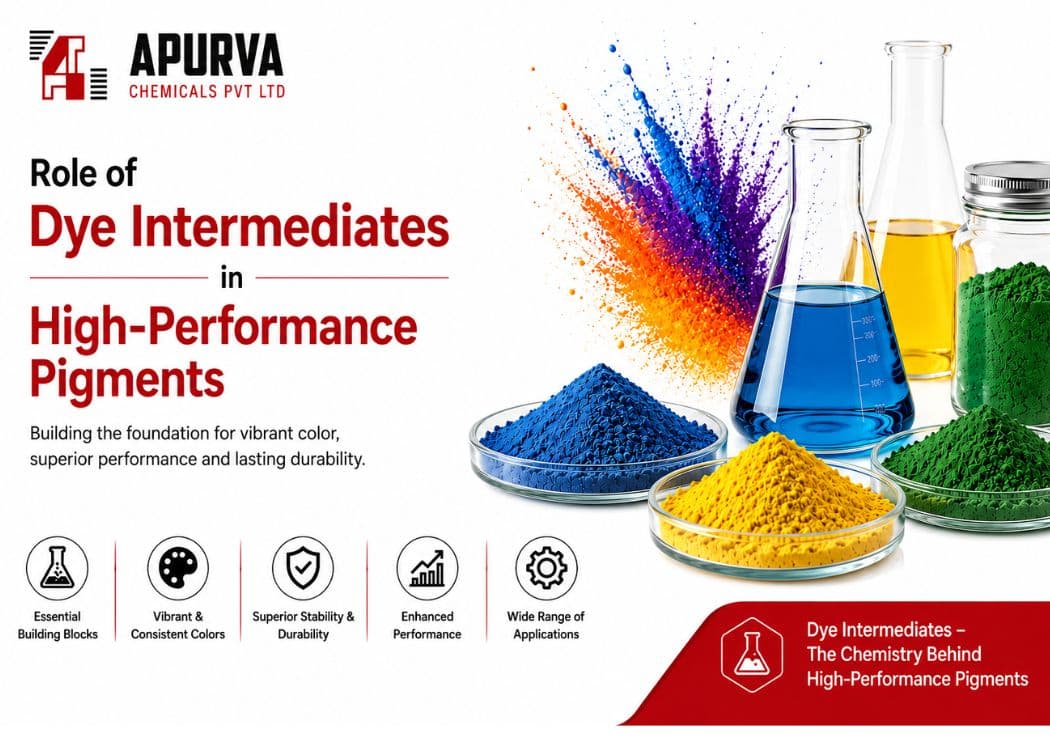
Role of Dye Intermediates in High-Performance Pigments
Color plays a critical role across industries ranging from automotive coatings and plastics to textiles, printing inks, construction materials, and specialty chemicals. Behind the vibrant colors and long-lasting performance of modern pigments lies a complex manufacturing process that begins with one essential component: dye intermediates.
While pigments are often recognized for their color strength, durability, and resistance properties, their performance depends heavily on the quality of the chemical building blocks used during production. Dye intermediates serve as these foundational compounds, enabling manufacturers to create advanced colorants that meet demanding industrial requirements.
As industries continue seeking superior color performance, regulatory compliance, and sustainability, the importance of high-quality dye intermediates in pigment manufacturing continues to grow.
How Do Dye Intermediates Work in Pigment Manufacturing?
Dye intermediates function as chemical building blocks during pigment synthesis.
Simplified Production Process
Raw chemical materials are selected.
Dye intermediates are synthesized.
Chemical reactions modify molecular structures.
Pigment compounds are formed.
Processing and purification occur.
Quality testing verifies performance.
Each stage requires strict process control because even minor variations in intermediate quality can significantly impact the final pigment's properties.
What Are High-Performance Pigments?
High-performance pigments (HPPs) are advanced pigments designed to deliver exceptional color strength, durability, heat resistance, chemical stability, and weather resistance.
Unlike conventional pigments, high-performance pigments are engineered for demanding applications where long-term performance is critical.
Key Characteristics
Excellent color retention
High UV resistance
Superior weatherability
Chemical resistance
Heat stability
Enhanced durability
These properties make HPPs valuable across multiple industrial sectors.
Why Are Dye Intermediates Important for High-Performance Pigments?
The performance of a pigment begins at the molecular level.
Dye intermediates influence:
Color purity
Pigment strength
Particle consistency
Stability
Processing efficiency
Without high-quality intermediates, manufacturers may struggle to achieve the demanding specifications required by modern industries.
Dye intermediates are important because they determine the chemical structure and quality of the final pigment, directly affecting performance, durability, and color consistency.
Key Roles of Dye Intermediates in High-Performance Pigments
1. Enhancing Color Strength
Color strength refers to the intensity and effectiveness of a pigment.
High-purity dye intermediates help manufacturers achieve:
Brighter colors
Better tinting strength
Improved opacity
Consistent coloration
This is particularly important for automotive and industrial coating applications.
2. Improving Chemical Stability
Many industrial applications expose pigments to harsh environments.
Quality dye intermediates contribute to:
Solvent resistance
Acid resistance
Alkali resistance
Oxidation resistance
These properties ensure pigments maintain performance over extended periods.
3. Supporting UV and Weather Resistance
Outdoor applications require pigments that can withstand sunlight and environmental exposure.
Examples include:
Automotive coatings
Exterior paints
Construction materials
Plastic products
Properly synthesized intermediates help create pigments with superior weathering performance.
4. Increasing Thermal Stability
Many manufacturing processes involve elevated temperatures.
Examples include:
Plastic extrusion
Powder coatings
Engineering polymers
Heat-resistant pigments rely on carefully selected dye intermediates to maintain color integrity during processing.
5. Enabling Consistent Production Quality
Manufacturers seek repeatable results across production batches.
Benefits include:
Reduced waste
Better quality control
Improved process efficiency
Customer satisfaction
Consistency begins with reliable raw materials.
Applications of High-Performance Pigments
Automotive Industry
Used in:
Vehicle coatings
Interior components
Plastic trim parts
Requirements include UV resistance, durability, and color consistency.
Industrial Coatings
Applications include:
Machinery
Equipment
Protective coatings
Pigments must withstand harsh environmental conditions.
Plastics Manufacturing
Used in:
Packaging
Consumer products
Engineering plastics
Heat stability is particularly important.
Printing Inks
Modern inks require:
Strong color performance
Chemical resistance
Print durability
Construction Materials
Used in:
Roofing materials
Concrete products
Decorative coatings
Long-term weather resistance is critical.
Dye Intermediates vs Conventional Raw Materials
Factor | High-Quality Dye Intermediates | Lower-Quality Alternatives |
Color Consistency | Excellent | Variable |
Pigment Strength | High | Moderate |
Durability | Superior | Lower |
Production Efficiency | Improved | Reduced |
Regulatory Compliance | Easier | Challenging |
Waste Generation | Lower | Higher |
This comparison highlights why manufacturers prioritize quality sourcing.
How to Choose the Right Dye Intermediates for Pigment Manufacturing
Selecting the appropriate intermediates is critical for achieving desired pigment performance.
Evaluate Product Purity
Higher purity often results in:
Better pigment quality
Improved stability
Consistent production outcomes
Assess Supplier Expertise
Experienced manufacturers provide:
Technical support
Product guidance
Consistent quality standards
Verify Compliance Standards
Look for suppliers that maintain:
ISO certifications
Environmental compliance
Product traceability
Consider Production Consistency
Reliable suppliers should demonstrate strong quality control systems and batch-to-batch consistency.
Common Mistakes to Avoid
Prioritizing Price Over Quality: Lower-cost materials may increase production risks and reduce pigment performance.
Ignoring Technical Specifications: Every application requires specific performance characteristics.
Failing to Verify Supplier Credentials: Manufacturing capability and quality systems should be thoroughly evaluated.
Overlooking Regulatory Requirements: Compliance issues can disrupt market access and customer approvals.
Neglecting Long-Term Supplier Relationships: Strong supplier partnerships improve reliability and product consistency.
Industry Trends Influencing Dye Intermediates and Pigments
Several trends are shaping the future of industrial pigments.
Sustainability Initiatives
Manufacturers are adopting:
Cleaner production methods
Energy-efficient processes
Waste reduction programs
Regulatory Compliance
Global regulations continue to influence raw material selection.
Advanced Pigment Technologies
Demand is increasing for:
High-performance coatings
Specialty plastics
Functional pigments
Supply Chain Diversification
Manufacturers increasingly seek reliable sourcing partners to minimize disruptions.
Why Manufacturers Partner with Trusted Suppliers
High-performance pigment production requires reliable raw material quality and technical expertise.
Established companies such as Apurva Chemicals support pigment manufacturers by supplying quality-focused dye intermediates that contribute to consistent performance, process reliability, and industry compliance.
Conclusion
Dye intermediates play a foundational role in the production of high-performance pigments used across automotive, plastics, coatings, printing, and construction industries. They directly influence color strength, durability, thermal stability, chemical resistance, and manufacturing consistency.
As performance requirements continue to increase, selecting high-quality dye intermediates becomes essential for achieving reliable pigment performance and long-term business success.
Looking for Quality Dye Intermediates?
Apurva Chemicals provides dependable dye intermediate solutions designed to support pigment manufacturers seeking consistency, quality, and technical excellence in their production processes.