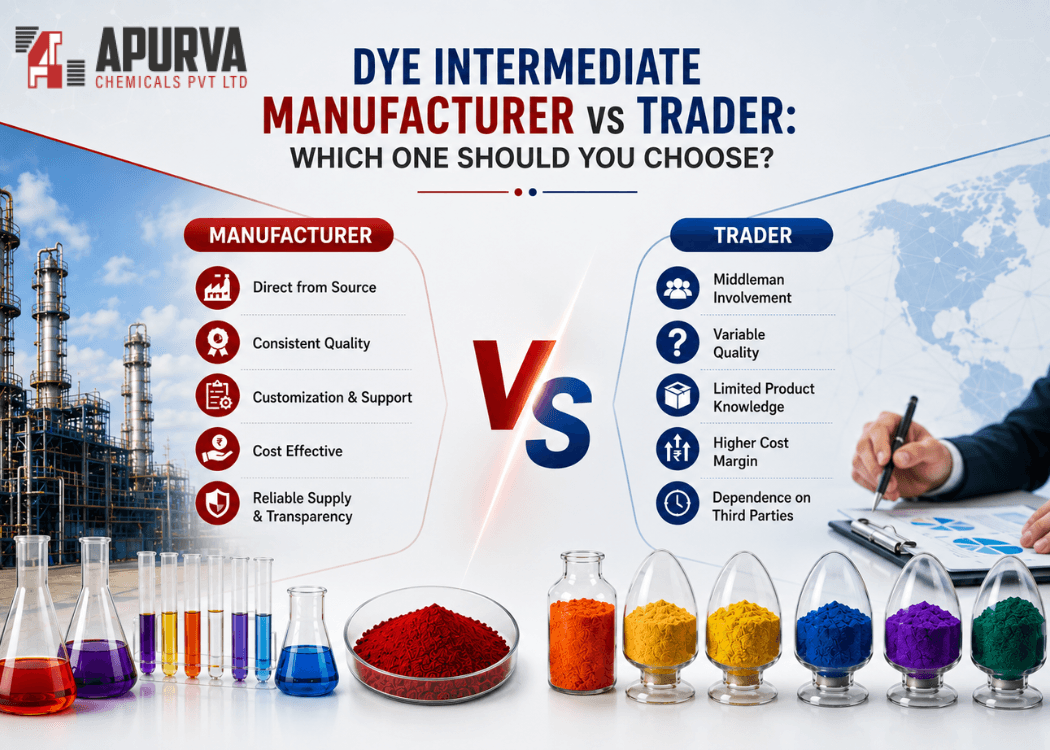
Dye Intermediate Manufacturer vs Trader: Which One Should You Choose?
When sourcing dye intermediates for textile dyes, pigments, or specialty chemicals, one of the first decisions buyers face is whether to purchase directly from a Dye Intermediate Manufacturer or through a Dye Intermediate Trader. While both play important roles in the supply chain, they offer different advantages depending on your business requirements.
Manufacturers produce chemicals in their own facilities, while traders source products from one or more manufacturers and resell them to customers. Understanding the differences between these business models can help you make better purchasing decisions based on quality, pricing, technical support, customization, and long-term reliability.
This guide explains the differences between a Dye Intermediate Manufacturer and a Dye Intermediate Trader, compares their advantages, and helps you determine which option best fits your business.
What Is a Dye Intermediate Manufacturer?
A Dye Intermediate Manufacturer is a company that produces dye intermediates in its own manufacturing facility using controlled chemical processes. Manufacturers are responsible for research, production, quality control, packaging, and regulatory compliance before supplying products to customers.
Key Characteristics
Own production facilities
In-house quality testing
Technical expertise
Process control
Consistent batch production
Custom manufacturing capabilities
Manufacturers often supply directly to dye producers, chemical companies, exporters, and industrial buyers.
What Is a Dye Intermediate Trader?
A Dye Intermediate Trader purchases chemicals from manufacturers and distributes them to customers without producing the products themselves.
Traders typically maintain inventories from multiple manufacturers and offer customers a wider product portfolio through a single source.
Key Characteristics
No manufacturing facility
Multiple supplier network
Inventory management
Faster availability for some products
Flexible sourcing options
They often serve customers who need smaller quantities or multiple products from different manufacturers.
Manufacturer vs Trader: What's the Difference?
Feature | Dye Intermediate Manufacturer | Dye Intermediate Trader |
Production | Own manufacturing facility | Purchases from manufacturers |
Product Knowledge | High technical expertise | Limited to supplier information |
Quality Control | In-house testing and inspection | Depends on manufacturer |
Pricing | Direct factory pricing | Includes trading margin |
Customization | Often available | Usually limited |
Supply Stability | Better long-term consistency | Depends on supplier network |
Technical Support | Process and product guidance | Basic product support |
Traceability | Direct production records | Based on manufacturer documents |
Why Does Your Choice Matter?
Selecting the right supplier affects more than just price. It influences product quality, production efficiency, delivery reliability, and long-term business performance.
Choosing the appropriate sourcing partner helps you:
Maintain consistent product quality
Reduce procurement risks
Improve supply chain reliability
Control production costs
Build long-term supplier relationships
Benefits of Buying from a Dye Intermediate Manufacturer
1. Better Quality Control
Manufacturers oversee every stage of production, from raw material selection to final quality inspection. This helps ensure consistent specifications and reliable batch quality.
2. Competitive Pricing
Buying directly from a manufacturer often reduces additional trading costs, especially for regular or bulk purchases.
3. Technical Expertise
Manufacturers understand their products in detail and can provide technical documentation such as:
Certificate of Analysis (COA)
Safety Data Sheet (SDS)
Technical Specifications
Handling Guidelines
4. Product Customization
Some manufacturers can customize packaging, product grades, or specifications to meet customer requirements.
5. Reliable Long-Term Supply
Manufacturers generally offer better production planning and supply continuity, reducing the risk of stock shortages.
When Is a Dye Intermediate Trader a Good Choice?
Traders can be a practical option in certain situations.
A trader may be suitable if you:
Need small order quantities
Require products from multiple manufacturers
Want a single procurement source
Need faster access to stocked materials
Are testing new products before large-scale purchasing
For short-term or diversified sourcing, traders can provide flexibility.
How to Choose Between a Manufacturer and a Trader
Before selecting a supplier, evaluate the following factors.
Product Quality
Ask about:
Quality testing procedures
Batch consistency
Product specifications
Technical documentation
Manufacturing Capability
If working with a manufacturer, verify:
Production capacity
Manufacturing infrastructure
Process controls
Export capabilities
Certifications and Compliance
Reliable suppliers typically provide:
Quality management systems
COA and SDS
Regulatory documentation
Export-compliant packaging
Supply Reliability
Consider:
Lead times
Inventory management
Production planning
Emergency supply capabilities
Technical Support
Manufacturers usually offer better assistance regarding:
Product applications
Handling recommendations
Process optimization
Packaging options
Common Mistakes to Avoid
When sourcing dye intermediates, avoid these common mistakes:
Choosing only based on the lowest price
Ignoring quality certifications
Not requesting technical documentation
Failing to verify manufacturing capabilities
Overlooking packaging standards
Not evaluating long-term supply reliability
Skipping supplier audits or background checks
Taking time to assess suppliers can prevent costly production issues.
Industry Applications of Dye Intermediates
Dye intermediates are essential in manufacturing products for several industries, including:
Textile dyes
Pigments
Leather dyes
Paper dyes
Printing inks
Specialty chemicals
Industrial coatings
Each application requires consistent raw material quality, making supplier selection an important factor.
Why Many Businesses Prefer Manufacturers for Bulk Orders
Businesses with ongoing production requirements often work directly with manufacturers because they offer:
Stable supply chains
Consistent product quality
Better pricing for volume orders
Technical consultation
Export-ready packaging
Long-term business partnerships
For companies focused on production efficiency and quality, direct sourcing from a Chemical Intermediate Manufacturer can provide significant long-term value.
Why Choose Apurva Chemicals?
Apurva Chemicals is a trusted Dye Intermediate Manufacturer in India specializing in high-quality dye intermediates for domestic and international customers. The company focuses on consistent product quality, stringent quality control, export-ready packaging, and reliable supply to support the needs of dye, pigment, and specialty chemical manufacturers.
Looking for a Reliable Dye Intermediate Manufacturer?
Partner with Apurva Chemicals for high-quality dye intermediates backed by consistent manufacturing, technical expertise, and dependable supply. Contact our team today to discuss your requirements, request product specifications, or receive a customized quotation.
Conclusion
Choosing between a Dye Intermediate Manufacturer and a Dye Intermediate Trader depends on your sourcing priorities. If you need technical expertise, consistent quality, customization, and long-term supply, working directly with a manufacturer is often the better choice. If your requirements involve smaller quantities or products from multiple sources, a trader may offer greater flexibility.
By evaluating factors such as quality control, pricing, technical support, certifications, and supply reliability, businesses can select the right partner and build a stronger, more efficient procurement strategy.
Simplify Your Chemical Sourcing
Partner with Apurva Chemicals for high-quality dye intermediates manufactured to meet industry standards. From consistent quality to export-ready packaging and responsive support, we help businesses build a reliable supply chain. Request a quote today and discover the advantages of working directly with a manufacturer.