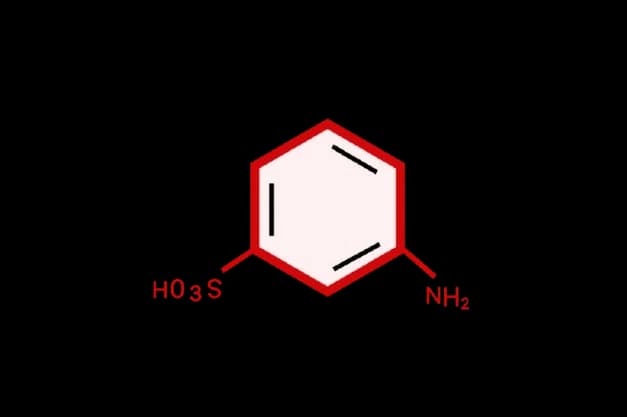
Metanilic Acid (CAS 121-47-1) Manufacturer & Supplier in India MSDS (Material Safety Data Sheet) or SDS, COA and Specs
Metanilic Acid (CAS 121-47-1) Manufacturer & Supplier in India
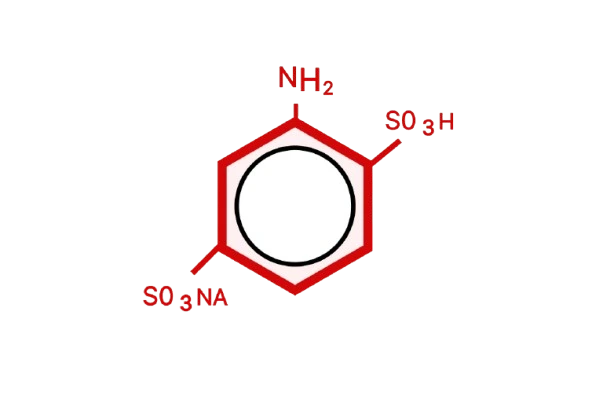
Metanilic Acid (CAS 121-47-1) is a key dye intermediate used in the production of dyes, pigments, optical brighteners, and specialty chemicals. As trusted Metanilic Acid manufacturers in India, Apurva Chemicals supplies high-purity material for consistent quality, efficient processing, and reliable industrial applications.
| CAS No. | 121-47-1 |
| Formula | C6H7NO3s |
| Assay (Method) | 99.0% Min (By GC/HPLC) |
| Molecular Weight | 173.19 g/mol |
| Appearance | White Powder |
| Application | Dyes Intermediate, OBA |
| Density | 1.69 |
| Packaging | 25 KG / 50 KG HDPE Drums or UN Approved Bags |
| MOQ | 25 KG |
| Lead Time | 7 to 15 Days (Depending on Location) |
| Synonym |
|
What is Metanilic Acid?
Metanilic Acid is an organic chemical compound identified by CAS 121-47-1 that serves as a key intermediate in the production of dyes, pigments, optical brighteners, and specialty chemicals. It is widely used by chemical and textile industries because of its ability to support the synthesis of complex colorants and functional chemical products while maintaining manufacturing consistency and product quality.
Why Metanilic Acid Matters
Modern chemical and dye manufacturing industries require raw materials that deliver consistent performance, reliable reaction behavior, and scalable production efficiency.
Metanilic Acid helps solve several industry challenges:
Maintaining consistent dye and pigment quality.
Supporting efficient chemical synthesis processes.
Reducing batch-to-batch variation.
Improving manufacturing productivity.
Enabling production of specialty chemicals with specific performance characteristics.
Business Benefits
Improved production consistency.
Reliable raw material quality.
Enhanced process control.
Better product performance.
Reduced manufacturing risks.
Operational Advantages
Suitable for large-scale production.
Supports efficient chemical reactions.
Compatible with multiple downstream applications.
Enables consistent product development and innovation.
Key Features and Benefits
High Chemical Purity
Metanilic Acid is manufactured to meet stringent quality requirements for industrial applications.
Why It Matters: Consistent purity helps maintain predictable reaction outcomes.
Business Benefit: Improved manufacturing efficiency and reduced quality deviations.
Essential Dye Intermediate
Metanilic Acid serves as a critical building block in dye and pigment synthesis.
Why It Matters: Reliable intermediates are necessary for producing high-quality colorants.
Business Benefit: Consistent dye production and improved end-product quality.
Excellent Process Compatibility
The product integrates effectively into a variety of chemical manufacturing processes.
Why It Matters: Manufacturers often require versatile raw materials for different formulations.
Business Benefit: Greater production flexibility and operational efficiency.
Reliable Reaction Performance
Metanilic Acid supports controlled and predictable chemical reactions.
Why It Matters: Stable reaction behavior reduces process uncertainty.
Business Benefit: Lower production risks and improved process optimization.
Suitable for Specialty Chemical Manufacturing
The product is used in advanced chemical formulations across multiple industries.
Why It Matters: Specialty applications require dependable intermediate materials.
Business Benefit: Supports product innovation and development.
Consistent Batch Quality
Quality-controlled manufacturing ensures dependable product characteristics.
Why It Matters: Consistency is essential for industrial-scale production.
Business Benefit: Improved customer satisfaction and process reliability.
Supports Sustainable Manufacturing
Efficient raw materials help reduce waste and improve resource utilization.
Why It Matters: Sustainability is increasingly important across global industries.
Business Benefit: Better operational efficiency and environmental responsibility.
Global Supply Availability
Metanilic Acid is widely utilized across international chemical supply chains.
Why It Matters: Reliable sourcing supports uninterrupted production.
Business Benefit: Improved procurement planning and supply security.
Applications of Metanilic Acid
Industrial Applications
Dye Manufacturing
Metanilic Acid is extensively used in the production of azo dyes and reactive dyes.
Benefits:
Improved dye quality.
Consistent color development.
Efficient manufacturing processes.
Common Use Cases:
Textile dyes.
Industrial colorants.
Specialty dye formulations.
Pigment Production
Pigment manufacturers use Metanilic Acid as an intermediate for producing various color systems.
Benefits:
Reliable pigment synthesis.
Improved product consistency.
Enhanced production efficiency.
Common Use Cases:
Industrial pigments.
Printing pigments.
Coating applications.
Commercial Applications
Optical Brightener Manufacturing
Metanilic Acid contributes to the synthesis of optical brightening agents used in textiles and detergents.
Benefits:
Improved brightness performance.
Consistent product quality.
Enhanced visual appearance.
Common Use Cases:
Textile treatments.
Detergent formulations.
Paper processing.
Specialty Chemical Production
Chemical manufacturers use Metanilic Acid in specialized formulations.
Benefits:
Greater formulation flexibility.
Reliable chemical performance.
Consistent product development.
Infrastructure Applications
Industrial Coatings and Materials
Metanilic Acid-derived products contribute to coatings and industrial material applications.
Benefits:
Improved product functionality.
Consistent manufacturing quality.
Enhanced formulation reliability.
Specialized Applications
Research and Development
R&D laboratories use Metanilic Acid in formulation studies and process development.
Benefits:
Reliable testing results.
Improved innovation capability.
Accurate process evaluation.
Advanced Chemical Synthesis
Used in specialty synthesis projects requiring aromatic sulfonic acid intermediates.
Benefits:
Controlled reaction pathways.
Consistent synthesis performance.
High-quality end products.
Industries Served
Chemical Manufacturing
Metanilic Acid is widely used by specialty chemical manufacturers producing intermediates and advanced formulations.
Dye and Pigment Industry
One of the largest application sectors where Metanilic Acid acts as a key raw material for colorant production.
Textile Industry
Supports the manufacture of dyes and auxiliaries used throughout textile processing operations.
Paper Industry
Used indirectly through optical brightening agents and specialty chemicals for paper enhancement.
Detergent Industry
Contributes to the production of brightening agents used in detergent formulations.
Research and Specialty Chemical Sector
Supports laboratory-scale and commercial-scale innovation projects across chemical industries.
Technical Considerations
Performance Factors
Performance depends on purity levels, process compatibility, formulation requirements, and reaction conditions.
Selection Criteria
When selecting Metanilic Acid, buyers should evaluate:
Product quality.
Purity specifications.
Manufacturing consi...
Scientific References & Citations
Export & Application Case Studies
European Textile Manufacturer
- Destination: Germany
- Volume: 5,000 KG / Monthly
Consistent supply of high-purity dye intermediates ensuring batch-to-batch color consistency for premium textile dyeing. Met stringent EU REACH compliance and heavy metal limits.
Agrochemical Synthesizer
- Destination: Japan
- Volume: 12,000 KG / Quarter
Custom packaging in moisture-proof UN approved bags and strict adherence to moisture content limits <0.5% for sensitive agrochemical synthesis workflows.