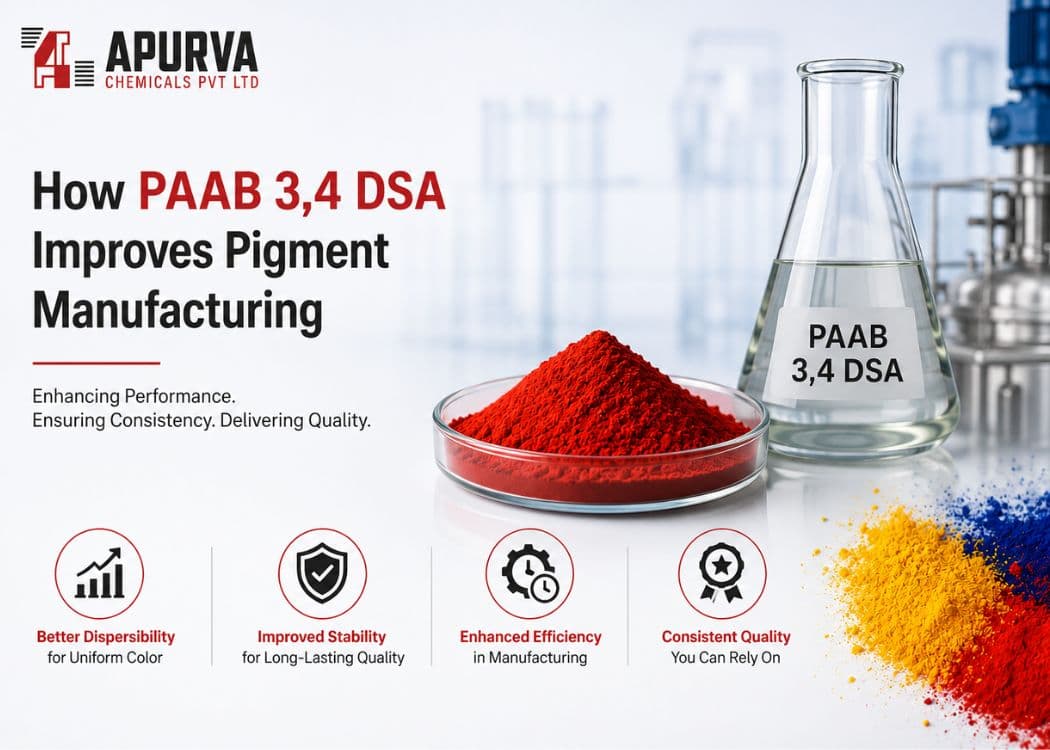
How PAAB 3,4 DSA Improves Pigment Manufacturing
The performance of industrial pigments depends heavily on the quality of the raw materials used during manufacturing. Whether pigments are intended for paints, coatings, plastics, inks, construction materials, or specialty applications, manufacturers require intermediates that deliver consistent performance, high color strength, and reliable processing characteristics.
Among the many compounds used in pigment synthesis, PAAB 3,4 DSA plays an important role as a specialized intermediate. Its chemical properties support the production of high-performance pigments that meet modern industry requirements for durability, color consistency, and manufacturing efficiency.
As global demand for advanced pigments continues to rise, manufacturers are increasingly focusing on high-quality pigment intermediates that can improve production outcomes while maintaining stringent quality standards.
This article explores how PAAB 3,4 DSA contributes to pigment manufacturing, its benefits, applications, and key considerations when sourcing this important intermediate.
How Does PAAB 3,4 DSA Work in Pigment Manufacturing?
Pigment manufacturing involves multiple chemical reactions that transform intermediates into stable color-producing compounds.
Step-by-Step Process
Step 1: Raw Material Selection
Manufacturers select quality intermediates, including PAAB 3,4 DSA.
Step 2: Chemical Synthesis
PAAB 3,4 DSA participates in controlled chemical reactions.
Step 3: Pigment Formation
Color-producing molecules are generated through synthesis processes.
Step 4: Purification
The pigment undergoes purification and quality control.
Step 5: Final Processing
Pigments are processed for specific industrial applications.
Why Is PAAB 3,4 DSA Important in Pigment Manufacturing?
Modern pigment manufacturers face increasing demands for:
Stronger color performance
Better consistency
Improved durability
Greater process efficiency
Lower production waste
High-quality intermediates are essential for achieving these goals.
Color strength is one of the most important performance indicators in pigment production. Higher tinting strength Improved color intensity Better pigment efficiency Enhanced visual appearance Stronger pigments often require lower loading levels in end-use applications. Consistency is critical for industries such as paints, plastics, coatings, and printing inks. Using quality PAAB 3,4 DSA helps manufacturers achieve: Uniform color development Batch-to-batch consistency Reduced shade variation Improved product reliability This is particularly important for large-scale production environments. Production efficiency directly impacts manufacturing profitability. Higher reaction efficiency Improved conversion rates Reduced raw material waste Lower reprocessing requirements Efficient synthesis contributes to cost-effective production. Industrial pigments must perform under challenging conditions. Better heat resistance Improved chemical resistance Enhanced weatherability Greater long-term stability These characteristics are essential for demanding industrial applications. Poor-quality intermediates can introduce process variability. Potential issues include: Color inconsistency Reduced pigment strength Production delays Higher rejection rates Quality PAAB 3,4 DSA helps minimize these risks. Consistent raw materials support streamlined production. Stable processing conditions Predictable reaction outcomes Improved quality control Reduced downtime This leads to improved operational performance and customer satisfaction. This comparison demonstrates why intermediate quality significantly impacts pigment performance. Paints and Coatings: Used in architectural, industrial, and automotive coatings. Plastic Coloration: Supports durable and vibrant color development in plastic products. Printing Inks: Provides consistent color performance in commercial and packaging inks. Construction Materials: Used in concrete, tiles, and decorative building materials. Industrial Applications: Supports specialty coatings and performance materials. Improved Pigment Quality: Supports superior color development and consistency. Better Production Economics: Reduces waste and improves yield. Enhanced Product Performance: Contributes to durability and stability. Greater Manufacturing Reliability: Supports predictable production outcomes. Improved Customer Satisfaction: Delivers consistent pigment performance across applications. Selecting a reliable supplier is critical for maintaining product quality. Review purity levels and technical documentation. Look for: Advanced production facilities Quality control systems Consistent batch production Experienced manufacturers often provide better technical support. Stable supply chains reduce production risks. Supplier expertise can help optimize manufacturing performance. Choosing Suppliers Based Only on Price: Lower-cost materials may result in higher overall production costs. Ignoring Quality Documentation: Technical specifications should always be reviewed. Neglecting Incoming Material Testing: Quality verification helps ensure consistency. Overlooking Long-Term Supply Stability: Reliable sourcing reduces operational disruptions. Failing to Evaluate Technical Support: Technical guidance can improve manufacturing outcomes. Growth in Industrial Pigments: Demand continues to increase across coatings, plastics, and construction sectors. Higher Performance Requirements: Customers expect improved durability and color consistency. Expansion of Specialty Pigments: Advanced applications require high-quality intermediates. Sustainable Manufacturing Initiatives: Manufacturers are focusing on efficient production and waste reduction. These trends are increasing demand for reliable pigment intermediates such as PAAB 3,4 DSA. The success of pigment manufacturing depends on the quality of the intermediate materials used throughout the production process. Reliable manufacturers invest in: Quality assurance systems Advanced manufacturing technologies Product testing procedures Technical support capabilities Companies such as Apurva Chemicals support pigment manufacturers with quality-focused intermediates that help improve manufacturing consistency and product performance. PAAB 3,4 DSA plays an important role in modern pigment manufacturing by supporting efficient chemical synthesis, improving color strength, enhancing consistency, and increasing production efficiency. As demand for high-performance industrial pigments continues to grow, manufacturers must prioritize quality raw materials and dependable supply partners. By selecting high-quality pigment intermediates, businesses can improve product quality, reduce manufacturing challenges, and strengthen their competitive position in the global market. Partner with experienced manufacturers that provide consistent quality, technical expertise, and dependable supply solutions to support your pigment manufacturing requirements.How PAAB 3,4 DSA Improves Pigment Manufacturing
1. Enhances Color Strength
Benefits
2. Improves Shade Consistency
3. Supports Better Pigment Yield
Advantages
4. Enhances Pigment Stability
Performance Benefits
5. Reduces Manufacturing Defects
6. Improves Manufacturing Efficiency
Benefits Include
PAAB 3,4 DSA vs Lower-Quality Pigment Intermediates
Applications of Pigments Manufactured Using PAAB 3,4 DSA
Benefits of Using High-Quality PAAB 3,4 DSA
How to Choose the Right PAAB 3,4 DSA Supplier
Verify Product Specifications
Evaluate Manufacturing Capabilities
Assess Industry Experience
Review Supply Reliability
Consider Technical Assistance
Common Mistakes to Avoid
Industry Trends Driving Demand for Advanced Pigment Intermediates
Why Manufacturers Choose Reliable Pigment Intermediate Suppliers
Conclusion
Looking for Reliable PAAB 3,4 DSA Supply?