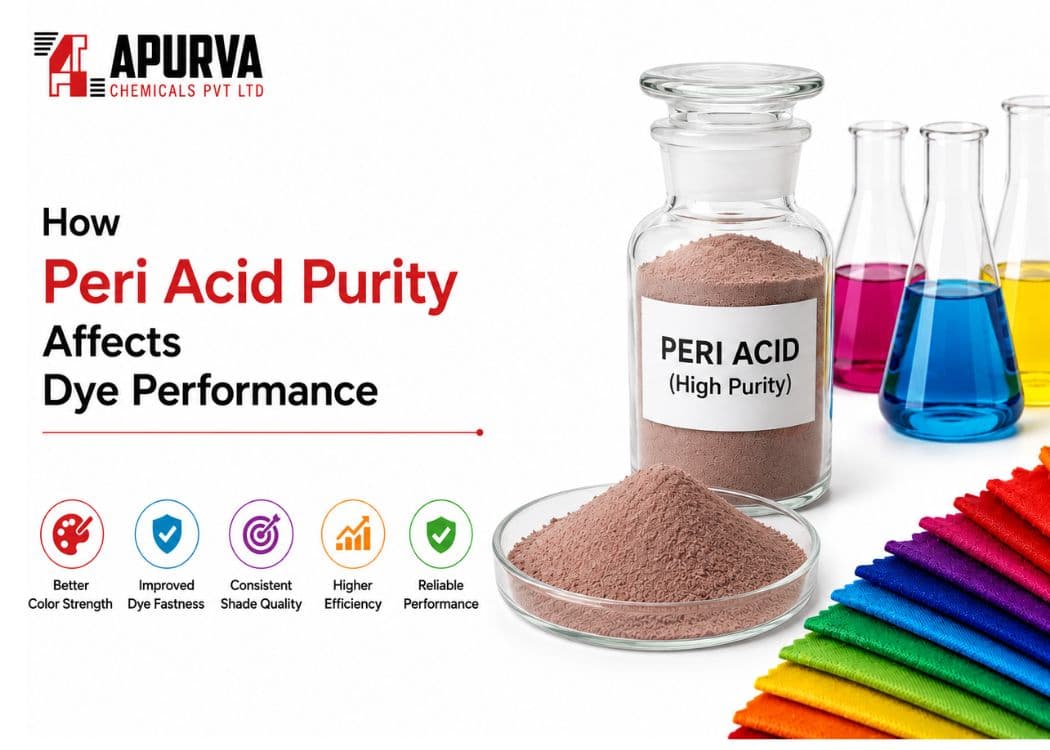
How Peri Acid Purity Affects Dye Performance
In the dye manufacturing industry, product performance begins with raw material quality. Even minor variations in chemical purity can significantly influence the final characteristics of a dye, including color strength, shade consistency, fastness properties, and production efficiency.
One of the most important dye intermediates used in the production of various colorants is Peri Acid (CAS 82-75-7). Manufacturers rely on this chemical intermediate to produce high-performance dyes for textile, leather, paper, ink, and specialty applications.
However, the effectiveness of Peri Acid depends heavily on its purity. High-purity Peri Acid contributes to predictable chemical reactions, superior dye quality, and consistent manufacturing outcomes, while impurities can introduce variability and performance issues.
This article explores how Peri Acid purity affects dye performance, why quality standards matter, and how manufacturers can select the right supplier for long-term success.
How Does Peri Acid Work in Dye Manufacturing?
Peri Acid participates in chemical reactions that form dye molecules.
Simplified Process
Peri Acid is introduced into the synthesis process.
Chemical reactions occur with other intermediates.
Dye molecules are formed.
Purification and processing take place.
Final dye products are tested and manufactured.
The purity of Peri Acid directly affects the efficiency and accuracy of these reactions.
Peri Acid purity affects dye performance by influencing reaction efficiency, dye strength, shade consistency, fastness properties, and overall product quality.
Why Is Peri Acid Purity Important?
In dye manufacturing, chemical reactions require precise raw material specifications.
Even small amounts of unwanted impurities can impact:
Color development
Dye yield
Shade reproducibility
Fastness characteristics
Manufacturing efficiency
High-purity Peri Acid helps manufacturers produce dyes with consistent quality, improved color strength, and reliable performance across production batches.
Color strength is a critical quality parameter in dye production. Stronger color intensity Better dye concentration Enhanced color development Improved product value Low-purity materials may reduce color yield and require additional processing. Textile manufacturers demand consistent shades across production runs. Inconsistent raw materials can lead to: Batch-to-batch variations Customer complaints Product rejection Reprocessing costs High-purity Peri Acid supports predictable reactions and consistent shade reproduction. Yield directly affects manufacturing efficiency. Better reaction conversion Reduced raw material waste Improved production economics Higher process efficiency Manufacturers often achieve greater productivity when using quality-controlled intermediates. Fastness refers to a dye's ability to maintain color during use. Wash fastness Light fastness Rubbing fastness Perspiration fastness High-quality intermediates help produce dyes with stronger and more stable molecular structures. Impurities can interfere with chemical reactions. Potential issues include: Off-shades Reduced dye strength Process instability Product inconsistencies Using high-purity Peri Acid minimizes these risks. Reliable raw materials allow manufacturers to maintain stable production processes. Benefits include: Faster production cycles Lower rejection rates Reduced rework Improved quality control This translates into cost savings and operational efficiency. This comparison highlights why purity remains a key purchasing consideration. Textile Dyesl: Used in dye formulations for cotton, wool, silk, and synthetic fibers. Pigment Manufacturing: Supports production of specialty pigments and colorants. Printing Inks: Used in color formulations requiring consistency and durability. Paper Dyes: Contributes to color development in paper processing. Specialty Chemicals: Functions as an intermediate in advanced chemical synthesis applications. Consistent Product Quality: Supports reproducible manufacturing outcomes. Better Dye Performance: Improves strength, brightness, and durability. Reduced Production Costs: Minimizes waste and reprocessing. Improved Customer Satisfaction: Ensures reliable product performance. Enhanced Manufacturing Efficiency: Supports streamlined production operations. Selecting the right supplier is just as important as selecting the right material. Request technical specifications and quality documentation. Look for: Quality control systems Batch testing procedures Consistent production practices Experienced manufacturers often provide greater process knowledge and technical support. Consistent availability helps prevent production interruptions. Technical support can improve process optimization and troubleshooting. Choosing Based Solely on Price: Lower-cost products may compromise quality and performance. Ignoring Purity Specifications: Purity directly affects dye manufacturing outcomes. Overlooking Supplier Credentials: Quality systems and manufacturing expertise matter. Skipping Batch Testing: Incoming material testing helps ensure consistency. Neglecting Long-Term Supplier Relationships: Reliable partnerships contribute to stable production. Growing Demand for High-Performance Dyes: Textile and industrial customers require better color quality and durability. Increased Focus on Quality Standards: Manufacturers are implementing stricter quality control procedures. Expansion of Specialty Chemicals: Demand for advanced chemical intermediates continues to grow. Global Supply Chain Optimization: Companies increasingly prioritize supplier reliability and consistency. These trends are driving greater emphasis on high-purity dye intermediates. The quality of a dye is only as good as the quality of its raw materials. Reliable manufacturers invest in: Advanced production processes Quality assurance systems Product testing Consistent manufacturing standards Companies such as Apurva Chemicals support dye manufacturers by supplying quality-focused Peri Acid and other dye intermediates that help maintain consistent production outcomes. Peri Acid (CAS 82-75-7) plays a critical role in dye manufacturing, but its effectiveness depends heavily on purity. High-purity Peri Acid contributes to improved color strength, better shade consistency, enhanced fastness properties, and greater manufacturing efficiency. As quality expectations continue to rise across the textile, pigment, and specialty chemical industries, manufacturers must prioritize reliable raw material sourcing and strict quality control standards. Choosing a trusted supplier can help ensure consistent product performance, reduced production risks, and long-term business success. Partner with experienced manufacturers that prioritize purity, consistency, and technical excellence to support your dye manufacturing requirements. Contact us today.How Peri Acid Purity Affects Dye Performance
1. Improves Color Strength
High-Purity Peri Acid Benefits
2. Enhances Shade Consistency
Why It Matters
3. Improves Dye Yield
Benefits of High Purity
4. Supports Better Fastness Properties
Key Fastness Characteristics
5. Reduces Manufacturing Defects
6. Improves Production Efficiency
Peri Acid Purity vs Low-Purity Alternatives
Applications of Peri Acid
Benefits of Using High-Purity Peri Acid
How to Choose the Right Peri Acid Supplier
Verify Product Purity
Evaluate Manufacturing Standards
Assess Industry Experience
Review Supply Reliability
Consider Technical Assistance
Common Mistakes Buyers Should Avoid
Industry Trends Driving Demand for High-Purity Peri Acid
Why Quality-Focused Manufacturers Matter
Conclusion
Looking for High-Quality Peri Acid?