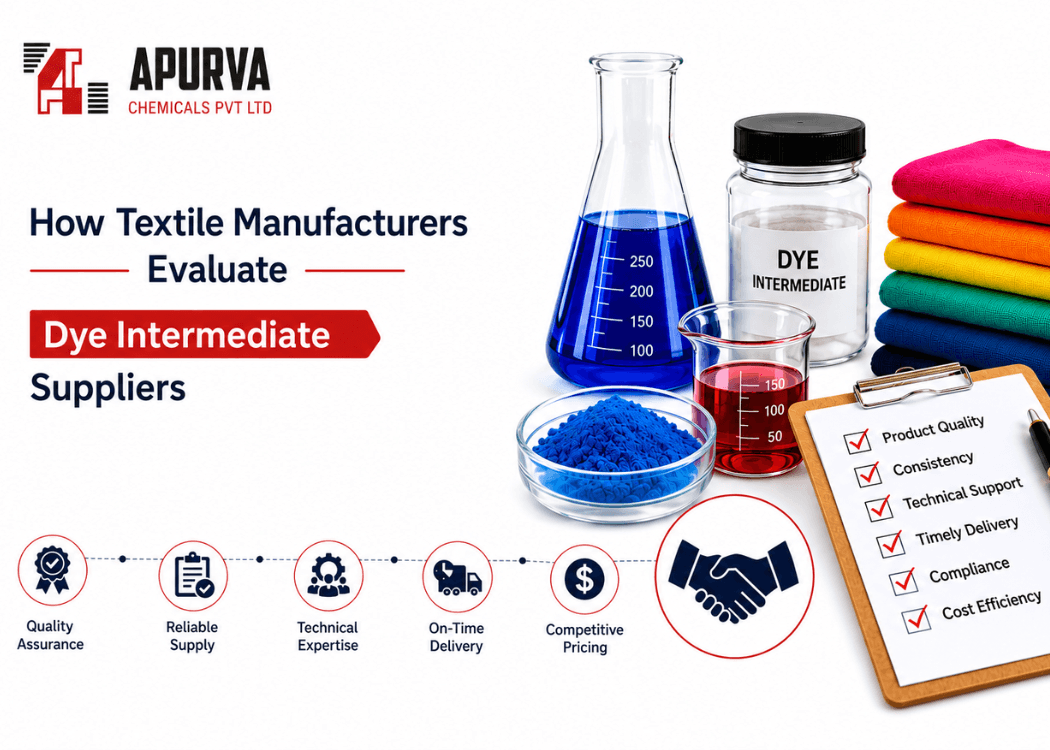
How Textile Manufacturers Evaluate Dye Intermediate Suppliers
The textile industry relies heavily on consistent color quality, production efficiency, and supply chain reliability. Behind every vibrant textile product is a carefully selected combination of dyes and chemicals, including high-quality dye intermediates that serve as the foundation for producing finished dyes.
For textile manufacturers, choosing the right dye intermediate suppliers is not simply a purchasing decision. It is a strategic business choice that affects product quality, customer satisfaction, regulatory compliance, and profitability.
As global textile markets become increasingly competitive, manufacturers are adopting more rigorous supplier evaluation processes. This article explores how textile companies assess dye intermediate manufacturers, the criteria they use, and the best practices that help build successful long-term sourcing partnerships.
Why Are Dye Intermediates Important for Textile Manufacturing?
Textile manufacturers depend on dye intermediates because they directly influence:
Color consistency
Shade reproducibility
Dye fixation efficiency
Product durability
Production productivity
A reliable supply of quality intermediates helps manufacturers reduce production defects and maintain customer expectations.
Key Benefits of High-Quality Dye Intermediates
Improved batch-to-batch consistency
Better dye performance
Enhanced textile appearance
Reduced production waste
Higher customer satisfaction
Compliance with industry regulations
How Textile Manufacturers Evaluate Dye Intermediate Suppliers
Textile manufacturers typically use a structured evaluation framework before approving a supplier.
1. Product Quality and Consistency
Quality remains the most important selection criterion.
Manufacturers evaluate:
Purity levels
Chemical composition
Batch consistency
Product stability
Performance characteristics
What Buyers Request
Certificates of Analysis (COA)
Technical Data Sheets (TDS)
Product specifications
Laboratory test reports
Consistent product quality helps prevent costly production interruptions and color variation issues.
2. Manufacturing Capabilities
Before entering long-term agreements, buyers assess the supplier's production infrastructure.
Key Evaluation Factors
Manufacturing capacity
Production technology
Process controls
Automation systems
Research and development capabilities
A supplier with modern facilities is generally better equipped to maintain quality and meet large-volume demands.
3. Regulatory Compliance and Certifications
Textile brands increasingly face pressure to comply with environmental and safety standards.
As a result, manufacturers carefully verify supplier compliance.
Common Areas Reviewed
Environmental regulations
Chemical safety standards
Waste management practices
Worker safety protocols
Product traceability systems
Common Certifications
Certification | Importance |
ISO 9001 | Quality Management |
ISO 14001 | Environmental Management |
REACH Compliance | European Market Access |
RoHS Compliance | Restricted Substance Control |
GMP Practices | Manufacturing Consistency |
Compliance helps manufacturers avoid legal, operational, and reputational risks.
4. Supply Chain Reliability
Even the highest-quality product loses value if deliveries are inconsistent.
Textile manufacturers evaluate:
Production capacity
Inventory management
Lead times
Export capabilities
Logistics infrastructure
Why Reliability Matters
Supply disruptions can result in:
Delayed production schedules
Missed customer deadlines
Increased operational costs
Reduced profitability
Reliable dye intermediate suppliers become strategic partners rather than transactional vendors.
5. Technical Support and Industry Expertise
Leading textile manufacturers prefer suppliers that offer technical assistance.
Valuable Support Services
Application guidance
Product recommendations
Troubleshooting assistance
Process optimization support
Documentation support
Technical collaboration often leads to better production efficiency and improved product performance.
6. Sustainability and Environmental Responsibility
Sustainability has become a major supplier selection factor.
Many textile brands now require environmentally responsible sourcing practices.
Sustainability Evaluation Criteria
Water conservation measures
Energy-efficient production
Emission control systems
Waste reduction programs
Responsible sourcing practices
Suppliers demonstrating strong environmental performance often gain preference in global procurement programs.
7. Cost Competitiveness and Total Value
Price is important, but experienced buyers evaluate total value rather than focusing solely on the lowest quote.
Total Value Assessment Includes
Product quality
Consistency
Delivery performance
Technical support
Compliance standards
Long-term reliability
The cheapest supplier may ultimately increase costs through quality failures or supply disruptions.
Supplier Evaluation Checklist for Textile Manufacturers
Evaluation Area | Importance |
Product Quality | Critical |
Batch Consistency | Critical |
Compliance Certifications | High |
Manufacturing Capacity | High |
Supply Reliability | High |
Technical Support | Medium to High |
Sustainability Practices | High |
Cost Competitiveness | Medium |
This checklist is commonly used by procurement teams when qualifying new suppliers.
Common Mistakes Textile Manufacturers Should Avoid
Selecting Suppliers Based Only on Price: Low-cost products can lead to inconsistent quality and production challenges.
Skipping Supplier Audits: Facility assessments help verify manufacturing standards and quality systems.
Ignoring Compliance Documentation: Incomplete compliance verification can create regulatory issues.
Overlooking Future Capacity: Suppliers should be able to support future growth requirements.
Depending on a Single Supplier: Diversified sourcing reduces supply chain risk.
What Makes a Strong Dye Intermediate Supplier?
The most successful supplier relationships share several characteristics:
Consistent product quality
Transparent communication
Strong technical expertise
Regulatory compliance
Sustainable manufacturing practices
Reliable delivery performance
Long-term partnership mindset
These qualities help textile manufacturers maintain competitiveness in demanding global markets.
Why Textile Manufacturers Partner with Established Suppliers
As supply chains become more complex, textile companies increasingly seek experienced dye intermediate manufacturers that can provide dependable quality, compliance support, and stable supply.
Companies such as Apurva Chemicals focus on delivering quality-focused manufacturing, technical expertise, and reliable supply solutions that support the evolving needs of textile and chemical industries worldwide.
Conclusion
Selecting the right dye intermediate suppliers is one of the most important procurement decisions textile manufacturers make. Product quality, consistency, regulatory compliance, technical support, sustainability, and supply reliability all influence supplier performance and long-term business success.
Rather than focusing solely on price, leading textile manufacturers evaluate suppliers based on overall value, operational reliability, and partnership potential. Businesses that adopt a structured supplier evaluation process are better positioned to reduce risk, improve product quality, and achieve sustainable growth.
Looking for a Trusted Dye Intermediate Partner?
Apurva Chemicals provides high-quality dye intermediates backed by manufacturing expertise, quality control processes, and a commitment to reliable customer support for global textile and chemical industries.