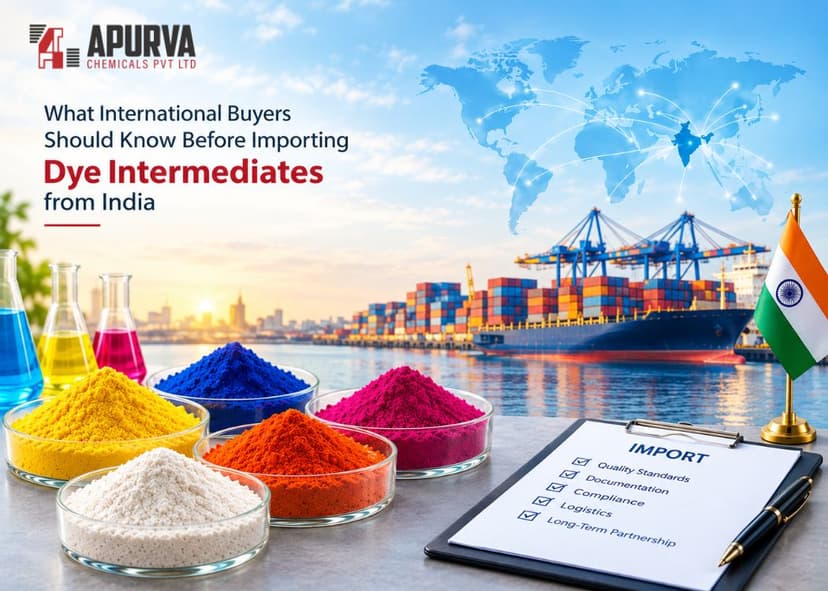

What International Buyers Should Know Before Importing Dye Intermediates from India
A dye intermediate is a chemical building block used to make dyes and pigments, and sometimes other industrial products. Because the final colour product depends on these inputs, their consistency affects production results. Many international buyers look to India for chemical intermediates because of its established chemical industry, its range of products, and the export services many suppliers offer.
Whether India is the right source depends on your chemical, quality requirements, destination market and the verified capabilities of each supplier. Before placing an import order, evaluate quality, documentation, logistics and total procurement cost together. A good dye intermediate supplier India offers should be assessed on all of these, not on price alone.
Understand Your Dye Intermediate Requirements Before Importing
Suppliers can only quote accurately when you define what you need. Before requesting quotations, prepare:
Chemical name and CAS number
Required grade and purity
Intended industrial application
Agreed product specifications
Quantity and order frequency
Packaging preferences
Destination country and delivery location
Names and trade synonyms vary between suppliers, so the CAS number is the most reliable identifier. Clear specifications reduce the risk of ordering the wrong material or receiving one that does not suit your process. They also make quotations from different suppliers comparable.
How to Evaluate a Dye Intermediate Supplier in India
Start by confirming who you are dealing with. Verify the business identity, years of relevant experience, and whether the company is a manufacturer, supplier, exporter or distributor. Each model is legitimate, but it affects who controls quality and how quickly problems can be resolved.
Then look at product range, sourcing capabilities and the ability to support bulk requirements. Ask how quality is controlled, what technical documents are routinely issued, and how clearly the team communicates. Quotations that state the product, specification, packaging and commercial terms plainly are usually a good sign.
Verify claims rather than relying on website descriptions. Request references or credentials where available, check them independently, and consider a sample order or a video call before committing to larger volumes.
Check Product Quality and Technical Documentation
Quality verification matters because small deviations in an intermediate can affect downstream dye production. Agree on specifications and acceptance criteria in writing before shipment, and ask what documentation will accompany each lot:
Certificate of Analysis (COA): batch-specific test results against the agreed specification
Safety Data Sheet (SDS/MSDS): hazard, handling and emergency information
Technical Data Sheet (TDS): product information, where available
Batch numbers and traceability: so any issue can be traced to a specific lot
Evaluate samples where appropriate, and use your own testing methods or an independent laboratory if your process demands it. Agree in advance on how quality discrepancies will be reported and resolved. Document requirements and testing methods vary by product, application and destination country.
Understand Export Documentation and Destination-Country Requirements
Required paperwork depends on the product classification, transport mode, destination and applicable regulations. Confirm the following with the exporter and your customs broker:
Commercial invoice and packing list
Certificate of Origin, where required
Bill of Lading or Air Waybill
COA and SDS
Any customs declarations, permits or regulatory documents
Confirm the correct HS code, import restrictions, labelling obligations and chemical-specific compliance rules before goods ship. Requirements differ by country and by chemical, and they change, so check current rules with your customs broker, freight forwarder and the relevant authorities.
Packaging, Labelling, and Safe Transportation
Packaging protects product quality and keeps the shipment compliant. Discuss packaging suitability for the specific chemical, protection against moisture, contamination and physical damage, and clear product and batch labelling. Ask for storage and handling instructions to accompany the shipment.
Not every dye intermediate has the same transport classification. Some may fall under dangerous-goods regulations, which affect packaging, labelling, carrier choice and cost. Agree on packaging before order confirmation and make sure it meets both the product’s handling needs and destination-country requirements.
Compare Pricing, Payment Terms, and Total Landed Cost
A low unit price can be misleading. Compare total landed cost, which includes:
Product price at your order quantity
Packaging costs
Freight and insurance
Customs duties and taxes
Port and handling charges
Inspection and documentation costs, where applicable
Currency fluctuations and payment terms
Incoterms define who handles and pays for shipping, insurance and risk at each stage. An EXW quotation and a CIF quotation, for example, cover very different responsibilities, so compare offers on equivalent terms. Before ordering, confirm the Incoterm, named delivery location, payment arrangements and who is responsible for insurance.
Shipping Timelines, Lead Times, and Supply Reliability
Plan the full timeline, not just the sea or air transit. It typically includes order confirmation, production or sourcing lead time, sample approval, dispatch, freight transit and customs clearance. Ask suppliers how they communicate delays or shipment changes.
Estimates can shift because of port congestion, documentation errors or inspections. Build realistic buffers into your schedules, consider safety stock for critical materials, and discuss repeat-order and long-term supply planning early. Approving samples before bulk purchasing also reduces risk.
Why Consider Apurva Chemicals for Dye Intermediate Requirements?
Apurva Chemicals is an Indian manufacturer, supplier and exporter of dye intermediates and specialty industrial chemicals. As a dye intermediate exporter India-based buyers and overseas customers can contact directly, the team can discuss your sourcing needs. You can review the product range on the Apurva Chemicals website and enquire about:
Product availability and specifications
Required quantities and repeat orders
COA and SDS documentation
Packaging options
Export documentation
Destination-specific shipping arrangements
Quotations and commercial terms
Conclusion: Make Informed Decisions When Importing Dye Intermediates from India
Successful imports rest on clear product specifications, supplier verification, quality documentation, export compliance, suitable packaging, transparent commercial terms and realistic schedules. Judge the complete supply arrangement rather than choosing a dye intermediate supplier India offers on price alone.
Discuss Your Dye Intermediate Requirements with Apurva Chemicals
Planning to import dye intermediates from India? Send us your product name, CAS number (where available), required quantity, destination country, packaging requirements and documentation needs. Our team will review your enquiry and respond with the information you need to evaluate your options and request a quotation.