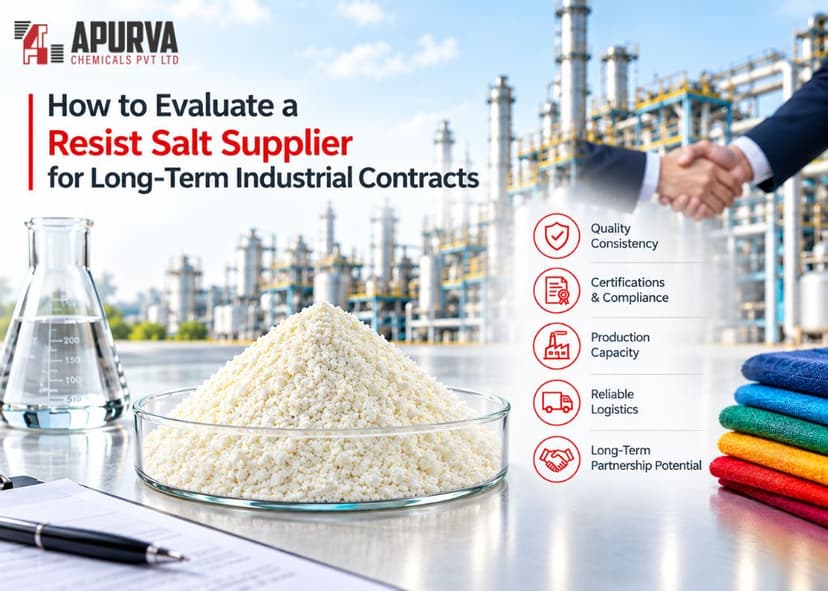


How to Evaluate a Resist Salt Supplier for Long-Term Industrial Contracts
When a plant relies on a chemical every week, the supplier becomes part of the production line. A late shipment, a batch that behaves differently from the last one, or a missing document at the port can disrupt operations far more than a small difference in unit price. Choosing a Resist Salt supplier is therefore less a one-off purchase and more a long-term operational decision.
Resist Salt is the trade name for sodium 3-nitrobenzenesulfonate, identified by CAS number 127-68-4. It is commonly associated with textile printing and dyeing processes. This guide explains how to assess suppliers on quality, capability, documentation, logistics, cost and communication, and what a long-term agreement should cover.
Understand Your Resist Salt Requirements Before Approaching Suppliers
Quotations are only comparable when every supplier answers the same question. Before you send enquiries, write down:
The intended industrial application
Required grade and purity
Monthly and annual consumption
Expected order frequency
Packaging and storage requirements
Delivery location, domestic or international
Technical documentation you need
A clear requirement prevents misunderstandings, speeds up responses and lets you compare offers like for like instead of guessing what each quote includes.
Evaluate Product Quality and Specification Consistency
Start with identity. The product name and CAS number 127-68-4 should appear consistently on every specification, certificate and label. Then agree the quality parameters that matter for your process, such as purity, appearance and any other limits, and put them in writing.
Consistency across batches matters as much as the quality of a single lot, so ask how the supplier controls and records quality before dispatch. Request a sample and evaluate it in your own process, and define acceptance criteria and test methods before recurring orders begin. Never rely on assumed figures. For current product details, see the official Apurva Chemicals Resist Salt product page.
Check the Resist Salt Supplier’s Manufacturing or Supply Capabilities
A long contract only works if the supplier can keep up with your demand throughout its term. Ask about:
Production or sourcing capabilities for your grade
Regular product availability
Ability to handle repeat and bulk orders
Order planning and typical lead times
Contingency arrangements for supply interruptions
How changes in availability are communicated
Also establish what kind of business you are dealing with. A manufacturer controls its own production, while a trader or distributor sources from others, and both can be legitimate. The risks and the questions differ, though. Ask directly about the supplier’s actual role, and verify the answer through documents, references or a visit rather than marketing claims alone.
Verify Documentation and Quality Assurance
A reliable Resist Salt chemical supplier should be comfortable sharing documentation. Buyers commonly request:
Certificate of Analysis (COA) for the batch supplied
Safety Data Sheet (SDS/MSDS) for handling and emergency information
Technical Data Sheet (TDS) describing the product
Batch identification and traceability information
Regulatory and export documents, where applicable
These records support quality verification, workplace safety, procurement files and shipment planning. The exact set depends on your application, destination country and contract terms, so confirm requirements early rather than at the point of shipment.
Assess Packaging, Storage and Logistics with a Resist Salt Bulk Supplier
Good chemistry can be spoiled by poor packing. When talking to a Resist Salt bulk supplier, check that packaging suits your order volume and protects against moisture and contamination. Labels should show the product name, CAS number and batch details.
Ask about storage and handling instructions, palletisation and shipment preparation, domestic transport or export logistics, and how delivery schedules and tracking are managed. Confirm standard and bulk packaging options directly with the supplier, since these vary and should not be assumed.
Compare Pricing, Payment Terms and Total Procurement Cost
The lowest quotation is not always the best value. Total cost includes the specification and grade, order quantity and frequency, packaging, freight and insurance, taxes and duties, payment terms and delivery commitments. It also includes the hidden costs of quality problems, rework or delayed shipments.
Compare suppliers on a like-for-like basis, using the same specification, quantity, delivery terms and documentation requirements. If two quotations are not built on the same assumptions, the price difference tells you very little.
Evaluate Communication and Long-Term Partnership Potential
Communication during the enquiry stage is a preview of the relationship. Notice how quickly the supplier responds, how clear the quotation is, and how it handles technical questions. Ask how complaints are resolved and how order updates are shared.
Pay attention to whether the supplier discusses realistic delivery commitments or simply promises whatever you want to hear. Transparent communication and documented agreements reduce misunderstandings, which matters most when orders recur over months or years.
What Should a Long-Term Resist Salt Supply Agreement Include?
Before signing, discuss and document:
Approved product specifications
Agreed quantities and ordering schedules
Pricing and review mechanisms
Delivery terms and lead times
Inspection and acceptance procedures
COA and SDS documentation
Packaging requirements
Procedures for non-conforming material
Communication and escalation procedures
Renewal and termination conditions
Final terms should be mutually agreed and reviewed by your commercial or legal team.
Why Consider Apurva Chemicals for Resist Salt Requirements?
Apurva Chemicals is an Indian manufacturer, supplier and exporter of dye intermediates and industrial chemicals. Buyers looking for a Resist Salt supplier in India can review the company’s product information on the official website and contact the team to discuss their specific requirements.
When you enquire, ask about:
Available grades and specifications
Documentation
Packaging options
Bulk quantities
Delivery arrangements
As with any supplier, confirm specifications and documents directly before committing to recurring orders.
Conclusion: Build a Reliable Long-Term Supplier Relationship
Choosing a Resist Salt supplier for a long-term contract means looking beyond the first quotation. Evaluate product quality, documentation, supply capability, logistics, pricing transparency and communication, and put the agreed terms in writing. A structured assessment helps you make an informed decision and build a more dependable supply arrangement.
If you are planning a recurring requirement, contact Apurva Chemicals to discuss Resist Salt (CAS 127-68-4), and share your quantity, specifications, packaging preferences and delivery destination.
Request Resist Salt Information from Apurva Chemicals
Planning a recurring Resist Salt requirement? Send us your required quantity, specifications, packaging preferences and delivery destination. Our team can share product information and discuss documentation, bulk quantities and delivery arrangements for domestic and export needs.