

Export Market Opportunities for Phenyl Peri Acid
The export market for specialty dye intermediates creates opportunities for chemical suppliers that can meet buyers’ requirements for product identity, consistent specifications, documentation, and dependable supply. Phenyl Peri Acid (CAS 82-76-8) is an aromatic chemical intermediate associated with dye and specialty chemical manufacturing. For international buyers, evaluating suppliers in India can be a practical part of sourcing research, provided product suitability, compliance requirements, and commercial terms are carefully verified.
For exporters, understanding potential markets and the factors influencing procurement decisions is essential to developing sustainable international business relationships. A structured approach to quality assurance, export documentation, and customer communication can help suppliers compete more effectively in the specialty chemicals sector.
Understanding Phenyl Peri Acid and Its Industrial Relevance
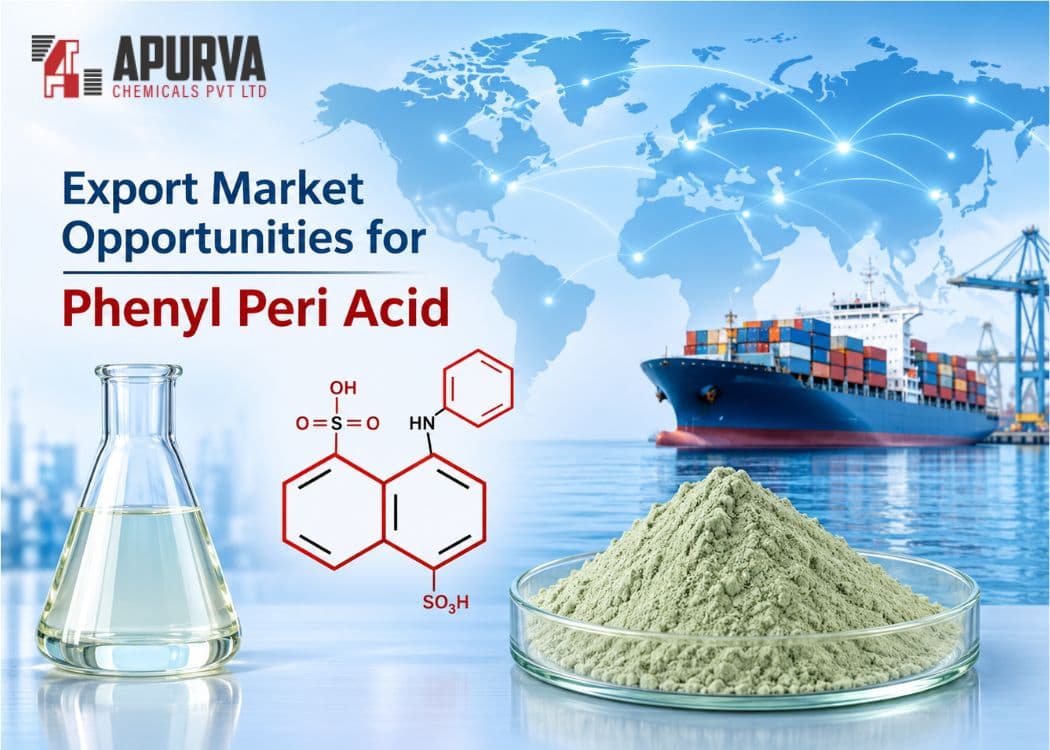
Phenyl Peri Acid is a specialty aromatic chemical intermediate identified by CAS number 82-76-8. Its industrial relevance is associated with dye intermediate production and selected specialty chemical synthesis applications. Buyers should confirm the chemical identity and agreed specifications before purchasing the material for a particular manufacturing process.
Manufacturer & Exporter from India
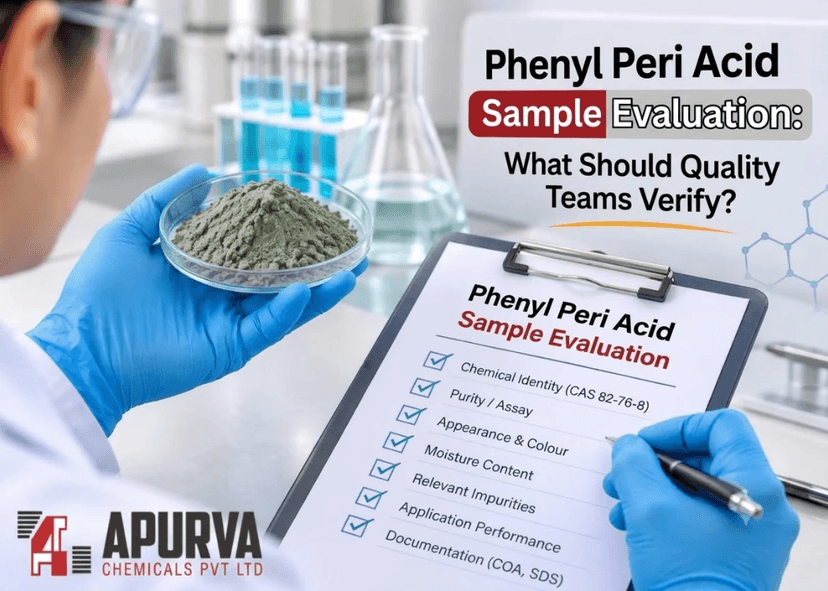
For procurement teams, the evaluation should extend beyond the product name. Relevant considerations include purity, moisture content where applicable, appearance, impurity profile, packaging, and the analytical methods used to verify quality.
Because chemical names and commercial descriptions can sometimes be confused, the CAS number should be included in enquiries, purchase orders, and technical documentation. This helps buyers and suppliers establish a consistent understanding of the material being sourced.
What Is Driving the Phenyl Peri Acid Export Market?
The Phenyl Peri Acid export market is influenced by several factors, including downstream manufacturing requirements, international sourcing strategies, product specifications, and supplier reliability. However, actual demand and commercial potential must be assessed using product-specific trade data and verified buyer enquiries.
Key factors include:
Dye and colorant manufacturing: Manufacturers evaluate intermediates according to their synthesis requirements and final product specifications.
Supplier diversification: Importers may assess additional suppliers to reduce dependence on a single source.
Quality consistency: Documented product characteristics help buyers assess suitability for repeat production.
Supply planning: Buyers consider order quantities, lead times, shipping arrangements, and inventory requirements.
Regulatory compliance: Importing companies must determine which chemical registration, safety, labelling, and customs requirements apply to their markets.
Exporters can use these factors to understand buyer priorities and develop a more targeted sales approach. Rather than assuming that general growth in the dye industry automatically indicates higher demand for Phenyl Peri Acid, businesses should validate opportunities through trade statistics, distributor discussions, and direct customer enquiries.
Potential Export Markets for Phenyl Peri Acid
International market development begins with identifying countries where relevant downstream industries operate and where the product can be legally imported and commercially supplied.
Europe
European markets may be worth investigating for specialty chemical sourcing opportunities. Exporters should first establish whether prospective customers use Phenyl Peri Acid in their manufacturing processes and verify applicable chemical registration, safety, and import requirements.
Asia-Pacific
Asia-Pacific offers a broad industrial landscape that includes textile processing, colorant manufacturing, and chemical production. Buyers and exporters should research individual countries, potential industrial customers, local competition, and logistics costs before prioritizing a market.
Middle East and Other International Markets
Chemical importers and distributors in the Middle East and other regions may provide additional opportunities, depending on downstream applications and local sourcing needs. Product classification, transport arrangements, import permissions, and order economics should be evaluated for each destination.
These regions are potential areas for research, not confirmation of established Phenyl Peri Acid demand. A practical market-entry strategy should prioritize verified enquiries and countries where regulatory and logistical requirements can be met.
Why Indian Suppliers Can Be Relevant to International Buyers
India has an established chemical manufacturing and export sector, making Indian suppliers relevant to international sourcing assessments. Nevertheless, each prospective supplier should be evaluated on its own manufacturing capabilities, quality systems, documentation, and commercial performance.
For buyers seeking a dye intermediates supplier in India, important evaluation criteria include product availability, technical documentation, packaging options, export coordination, and the ability to support repeat orders.
A supplier’s location alone does not establish product quality or delivery reliability. Importers should request verifiable information, compare specifications, and clarify responsibilities before entering into a supply agreement.
How to Choose a Reliable Phenyl Peri Acid Exporter
Selecting a suitable Phenyl Peri Acid exporter requires both technical and commercial assessment. Buyers should establish whether the material meets their intended application and whether the supplier can provide the documentation needed for internal approval.
Use the following checklist when evaluating a Phenyl Peri Acid supplier:
Product identity: Confirm the chemical name and CAS number 82-76-8.
Specifications: Request current specifications and agree on the parameters relevant to the application.
Certificate of Analysis: Ask for a batch-specific COA when available, with test results for agreed quality parameters.
Safety documentation: Obtain a current Safety Data Sheet (SDS/MSDS) and review applicable handling requirements.
Quality control: Ask about testing procedures, batch identification, traceability, and the handling of non-conforming material.
Packaging: Confirm suitable packaging, net weight, labelling, and protection during storage and transit.
Supply capability: Clarify available quantities, production or procurement lead times, and repeat-order arrangements.
Commercial terms: Compare pricing, payment terms, freight, delivery conditions, and the process for resolving quality concerns.
A Phenyl Peri Acid manufacturer should be assessed against documented capabilities rather than marketing claims alone. Buyers may also consider sample evaluation or a trial order, subject to the material's suitability and applicable procedures.
For additional guidance, businesses can review this article on how to evaluate dye intermediate suppliers.
Export Documentation and Compliance Considerations
Chemical exports require accurate documentation and compliance with the rules applicable to the product and destination. The exact requirements depend on the importing country, customs classification, shipment method, and relevant chemical regulations.
Commonly relevant documents include:
Commercial invoice and packing list
Certificate of Origin, where required
Bill of Lading or Air Waybill
Certificate of Analysis
Safety Data Sheet
Applicable customs declarations and regulatory documents
Exporters should verify product classification, labelling, packaging, and transport requirements before dispatch. Importers should independently confirm local obligations, including any applicable chemical registration or notification requirements.
Accurate documentation reduces avoidable delays and helps both parties maintain consistent product and shipment records.
How Apurva Chemicals Supports Phenyl Peri Acid Buyers
Apurva Chemicals identifies itself as a manufacturer, supplier, and exporter of dye intermediates and industrial chemicals, with operations in Vapi, Gujarat, India. Its official website provides product information and a portfolio of dye intermediates for industrial buyers.
Apurva Chemicals+1
International procurement teams can review the dedicated Phenyl Peri Acid product page to examine the available product information and initiate an enquiry.
Before placing an order, buyers should confirm current specifications, COA availability, SDS/MSDS, packaging options, order quantities, and destination-specific export requirements directly with the company.
Businesses evaluating related intermediates can also review Peri Acid product information. Peri Acid is identified by CAS 82-75-7, whereas Phenyl Peri Acid is identified by CAS 82-76-8. These are distinct products and should not be treated as interchangeable.
Manufacturer & Supplier in India+1
To learn more about the company's background and capabilities, visit About Apurva Chemicals.
Conclusion
Export market opportunities for Phenyl Peri Acid depend on verified demand, product suitability, regulatory compliance, and the ability to establish dependable international supply relationships. Buyers should assess technical specifications, quality documentation, packaging, and export arrangements before selecting a supplier.
Apurva Chemicals offers international buyers a starting point for evaluating Phenyl Peri Acid (CAS 82-76-8) through its dedicated product page. Companies interested in sourcing the material can share their specifications and destination requirements to begin a product and export enquiry.