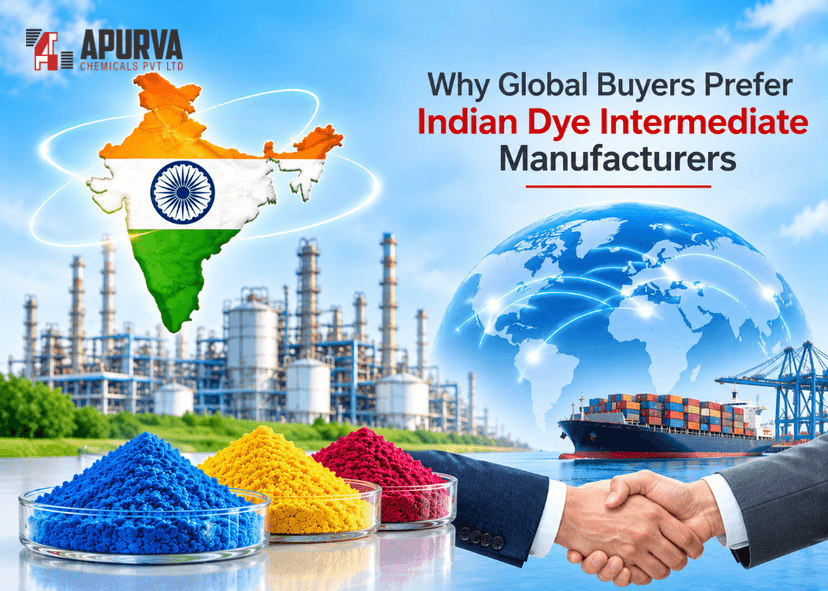


Why Global Buyers Prefer Indian Dye Intermediate Manufacturers
International buyers sourcing chemicals are looking beyond the quoted price. They need dependable product quality, consistent supply, clear documentation and manufacturers who understand the demands of industrial production. These requirements have made India an important sourcing destination for companies purchasing dyes and dye intermediates.
The Indian chemical industry offers a broad manufacturing base, experienced technical professionals and an expanding specialty chemicals segment. For global buyers, working with the right dye intermediate manufacturers in India can create opportunities for more flexible sourcing and long-term business relationships.
But what makes Indian manufacturers an attractive choice? From manufacturing capabilities to product availability and buyer support, several factors influence this preference.
A Growing Chemical Manufacturing Ecosystem
India has developed a diverse chemical manufacturing ecosystem serving industries such as textiles, pharmaceuticals, agriculture, plastics and pigments. This provides international buyers with access to manufacturers working across different chemical categories, including specialty intermediates.
According to NITI Aayog's report on India's participation in global chemical value chains, the country has opportunities to strengthen its position in international chemical markets through manufacturing expansion, innovation and greater value addition.
For buyers, this ecosystem offers more sourcing possibilities. Instead of depending on a limited number of international suppliers, procurement teams can explore Indian manufacturers for specific chemical requirements, compare capabilities and develop alternative supply relationships.
This is particularly relevant for companies that use multiple dye intermediates across their production processes.
A Diverse Range of Dye Intermediates Under One Manufacturing Market
Product availability is another important consideration when selecting a sourcing destination. Different dye formulations require different chemical building blocks, and buyers often need access to several intermediates rather than a single product.
A wider product ecosystem can simplify supplier discovery and help procurement teams identify manufacturers whose portfolios match their requirements.
Apurva Chemicals offers a range of dye intermediates for industrial buyers, including Resist Salt, Rhoduline Acid and other specialty chemical intermediates.
Manufacturing Capabilities and Process Understanding
The quality of a dye intermediate depends on more than its chemical name. Manufacturing controls, process consistency, raw material selection and quality checks all influence whether a product meets the buyer's application requirements.
This is why international procurement teams assess a manufacturer's technical capabilities before placing repeat orders.
A capable manufacturer should be able to discuss relevant product specifications, testing parameters, batch requirements and technical documentation. Buyers should also understand how the manufacturer manages changes in production and responds when a batch does not meet agreed requirements.
The dye intermediates manufacturing process can differ significantly between products. Therefore, buyers should avoid assuming that every manufacturer has the same capabilities simply because they offer similar product names.
For a sourcing decision, it is more useful to evaluate the manufacturer's experience with the specific intermediate, quality-control arrangements and ability to meet agreed specifications.
Flexible Sourcing and Commercial Considerations
Commercial competitiveness is not determined by the product quotation alone. Buyers must consider the complete cost of sourcing, including product specifications, order quantity, packaging, freight, insurance and delivery requirements.
This is where comparing dye intermediate prices requires a little more attention.
Two quotations for the same chemical may not be directly comparable if they differ in purity requirements, testing methods, packaging or delivery terms. A lower initial price may not provide better value if it leads to inconsistent batches, additional testing or production delays.
Indian manufacturers can be part of a broader sourcing strategy for companies seeking to compare suppliers and diversify procurement options. However, buyers should evaluate each supplier individually rather than assuming that all manufacturers offer the same price advantage or service level.
Before finalising an order, procurement teams should clarify:
Product grade and agreed specifications.
Required quantity and order frequency.
Packaging type and labelling requirements.
Inspection and documentation arrangements.
Delivery terms and expected dispatch timelines.
A transparent quotation makes it easier to compare suppliers on a like-for-like basis.
Export Readiness and Communication Matter
Supplying an international customer involves more than manufacturing a chemical. Export-oriented buyers may require commercial invoices, packing lists, certificates of analysis, safety data sheets and other documents depending on the product, destination and applicable regulations.
Clear communication is equally important. Buyers need timely responses about product availability, order status, packaging and documentation. Delays in receiving information can affect production planning even when the product itself is available.
When evaluating dye intermediate suppliers, international buyers should check whether the supplier understands their destination-market requirements and can coordinate the documentation and logistics agreed for the order.
A practical approach is to discuss these requirements before confirming the purchase order. This helps both parties establish expectations and reduces avoidable misunderstandings during dispatch.
Long-Term Supplier Relationships Support Production Planning
For dye and pigment manufacturers, sourcing is an ongoing activity. A supplier that performs well on one order must also be able to communicate effectively and work towards consistent requirements on subsequent orders.
Long-term relationships can make procurement planning easier by improving familiarity with product specifications, order patterns, packaging preferences and documentation needs.
Buyers should therefore look beyond the first transaction. Useful questions include:
Can the manufacturer support repeat-order requirements?
Are product specifications clearly documented?
Is there a defined process for handling quality concerns?
Can packaging be aligned with the buyer's handling and storage requirements?
Does the supplier communicate changes or delays promptly?
These considerations help companies identify a suitable manufacturing partner rather than choosing a supplier based only on a single quotation.
Why Consider Apurva Chemicals for Dye Intermediate Requirements?
Established in 1988, Apurva Chemicals is an ISO 9001:2015-certified manufacturer, supplier and exporter of dye intermediates and industrial chemicals. Based in Vapi, Gujarat, the company has more than 35 years of industry experience and operates with a dedicated quality-control laboratory and Research & Development team.
Its product portfolio includes Resist Salt, Metanilic Acid, Cleve's Acid, Peri Acid, Rhoduline Acid, Laurent's Acid and other specialty intermediates.
The company also provides different packaging options based on customer requirements. Its published packaging information includes standard bag sizes of 20–50 kg and jumbo bags of 350–700 kg, subject to specifications.
For buyers evaluating an Indian dye intermediates manufacturer, these details provide a starting point for discussing product requirements, packaging and supply expectations.
Explore the Apurva Chemicals product range to review available intermediates.
Conclusion
Global buyers consider Indian dye intermediate manufacturers for several reasons: a broad chemical manufacturing ecosystem, access to specialty products, sourcing flexibility and opportunities to build long-term supplier relationships.
However, the right sourcing decision still depends on the individual manufacturer's technical capabilities, product quality, documentation, communication and ability to meet agreed requirements.
For companies looking to source specialty dye intermediates, Apurva Chemicals offers a range of products backed by its manufacturing experience and quality-control infrastructure.
Looking for a dye intermediate supplier in India? Contact Apurva Chemicals to discuss your product specifications and industrial sourcing requirements.