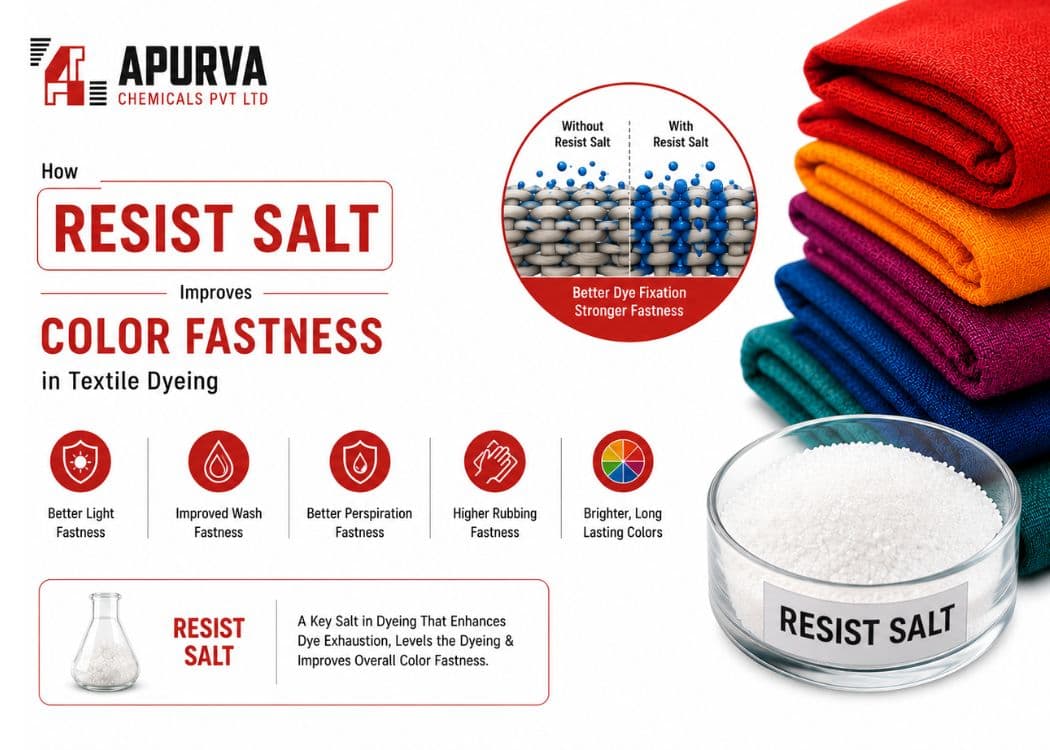
How Resist Salt Improves Color Fastness in Textile Dyeing
Color consistency and durability are among the most important quality parameters in modern textile manufacturing. Whether producing apparel, home textiles, industrial fabrics, or technical textiles, manufacturers must ensure that dyed fabrics maintain their appearance throughout repeated washing, rubbing, and environmental exposure.
One of the biggest challenges in the textile dyeing process is maintaining excellent color fastness while preventing unwanted dye degradation. To address this issue, textile processors rely on specialized textile dyeing chemicals that improve dye stability and dye-fiber interaction.
Among these chemicals, Resist Salt (CAS 127-68-4) plays a significant role. It helps protect dyes during processing, improves shade consistency, and enhances overall color fastness.
This article explores how Resist Salt works, its applications, benefits, and why it has become an important auxiliary in textile dyeing operations worldwide.
Resist Salt functions as a mild oxidizing agent that protects dyes from unwanted reduction reactions during textile processing. The dye solution is prepared with the required dyes and auxiliaries. Resist Salt is introduced into the dye bath according to process requirements. It inhibits reducing agents that can damage dye molecules. Dyes remain chemically stable throughout the process. Stable dyes bond more effectively with textile fibers. The finished fabric exhibits superior color retention and consistency. Resist Salt improves color fastness by preventing dye degradation and maintaining dye stability during the textile dyeing process, allowing better dye fixation and long-lasting color performance. Color fastness determines how well a fabric retains its original color when exposed to external conditions. Wash Fastness Rubbing Fastness Perspiration Fastness Light Fastness Water Fastness Poor fastness can result in: Color fading Shade inconsistency Customer complaints Product rejection Increased manufacturing costs For export-oriented textile businesses, maintaining high fastness standards is critical for market acceptance. One of the primary functions of Resist Salt is protecting dyes from reduction reactions. Preserves dye strength Maintains shade accuracy Improves dye utilization Reduces color loss This directly contributes to better fabric appearance and durability. Stable dye molecules are more likely to bond effectively with fibers. Improved dye fixation Enhanced wash fastness Longer-lasting colors Textile manufacturers often use Resist Salt to achieve reproducible dyeing results across multiple production batches. Uneven dyeing can create significant quality issues. Using Resist Salt helps: Achieve uniform dye distribution Reduce shade variations Improve batch-to-batch consistency This is especially important for branded apparel and export markets. Consumers expect textiles to retain color after repeated laundering. Resist Salt helps by: Improving dye retention Reducing dye bleeding Enhancing washing performance This results in greater customer satisfaction and product reliability. Color transfer during rubbing is a common quality concern. Resist Salt contributes to: Better dye fixation Reduced surface color transfer Improved dry and wet rubbing performance By stabilizing dyes and improving color development, Resist Salt enhances the overall appearance and quality of dyed fabrics. Benefits include: Brighter shades Uniform coloration Reduced defects Improved production efficiency Cotton Dyeing: Used extensively in cotton processing to improve dye stability and color retention. Denim Manufacturing: Supports consistent indigo dyeing and shade development. Yarn Dyeing: Improves color uniformity across yarn lots. Fabric Processing: Used in woven and knitted fabric dyeing operations. Industrial Textiles: Ensures reliable color performance in technical textile applications. This comparison highlights why Resist Salt remains an important component of professional dyeing operations. Improves color performance and consistency. Minimizes dye-related defects and reprocessing. Produces fabrics with superior fastness properties. Supports stable and predictable dyeing operations. Helps manufacturers meet demanding buyer specifications. When sourcing Resist Salt, buyers should evaluate: Product Purity: Consistent purity supports reliable dyeing performance. Manufacturing Standards: Look for suppliers with strong quality control systems. Technical Support: Experienced suppliers can assist with process optimization. Supply Reliability: Consistent product availability reduces production risks. Industry Experience: Established manufacturers often provide greater technical expertise. Using Incorrect Dosage: Improper dosing may affect dyeing performance. Ignoring Process Compatibility: Always verify compatibility with specific dye systems. Choosing Suppliers Based Only on Price: Quality consistency is often more valuable than short-term cost savings. Lack of Quality Testing: Regular testing ensures optimal process performance. Neglecting Technical Guidance: Supplier expertise can help improve dyeing outcomes. Higher Quality Standards: Global brands demand superior color fastness performance. Sustainable Textile Manufacturing: Efficient dye utilization reduces waste and resource consumption. Advanced Dyeing Technologies: Modern dyeing processes require specialized auxiliaries. Export Market Requirements; International buyers increasingly specify strict fastness criteria. As textile manufacturing evolves, demand for high-performance dyeing chemicals such as Resist Salt is expected to remain strong. The performance of any dyeing process depends heavily on chemical quality and consistency. Leading chemical manufacturers help textile processors achieve reliable production outcomes through: Consistent product quality Technical expertise Quality assurance systems Dependable supply chains Companies such as Apurva Chemicals support textile manufacturers with quality-focused chemical solutions designed to meet modern industry requirements. Resist Salt (CAS 127-68-4) plays a vital role in improving color fastness during the textile dyeing process. By preventing dye degradation, enhancing dye stability, and supporting better dye fixation, it helps manufacturers achieve superior fabric quality and consistent dyeing performance. As textile quality standards continue to rise, the use of effective textile dyeing chemicals becomes increasingly important. Manufacturers seeking improved color retention, reduced defects, and better customer satisfaction can benefit significantly from incorporating Resist Salt into their dyeing operations. Partner with Apurva Chemicals that provide consistent quality, technical expertise, and dependable supply solutions to support your textile dyeing requirements.How Does Resist Salt Work in the Textile Dyeing Process?
Step-by-Step Working Mechanism
Step 1: Dye Bath Preparation
Step 2: Addition of Resist Salt
Step 3: Prevention of Dye Reduction
Step 4: Improved Dye Stability
Step 5: Enhanced Dye Fixation
Step 6: Better Color Fastness
Why Is Color Fastness Important in Textile Manufacturing?
Common Fastness Tests
How Resist Salt Improves Color Fastness
1. Prevents Dye Degradation
Benefits
2. Improves Dye Stability
Result
3. Enhances Shade Consistency
4. Supports Better Wash Fastness
5. Improves Rubbing Fastness
6. Improves Overall Fabric Quality
Applications of Resist Salt in Textile Dyeing
Resist Salt vs Dyeing Without Resist Salt
Benefits of Resist Salt for Textile Manufacturers
Better Product Quality
Reduced Production Losses
Improved Customer Satisfaction
Greater Process Efficiency
Enhanced Competitive Advantage
How to Choose the Right Resist Salt Supplier
Common Mistakes to Avoid
Industry Trends Driving Demand for Resist Salt
Why Manufacturers Choose Reliable Chemical Suppliers
Conclusion
Looking for High-Quality Resist Salt?