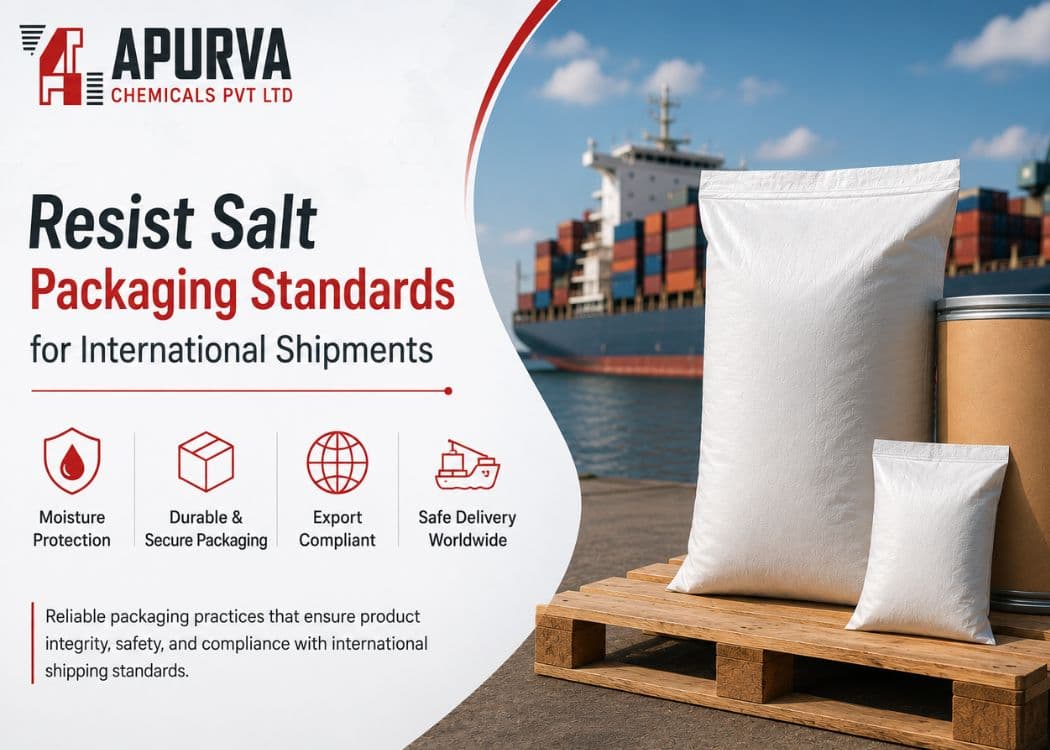
Resist Salt Packaging Standards for International Shipments
In the global chemical industry, product quality alone is not enough to ensure successful exports. Proper packaging plays a critical role in protecting chemicals during storage, transportation, and customs clearance. For manufacturers and exporters, following Resist Salt packaging standards helps prevent contamination, moisture absorption, leakage, product damage, and shipment delays.
Resist Salt is widely used in dye intermediates, textile processing, and chemical manufacturing. Since it is often transported across different climates and handling environments, its packaging must comply with international regulations while maintaining product integrity from the manufacturing facility to the customer's warehouse.
This guide explains Resist Salt packaging, export requirements, labeling standards, packaging materials, shipping considerations, and best practices for safe international transportation.
What Are Resist Salt Packaging Standards?
Resist Salt packaging standards refer to the recommended packaging methods, labeling requirements, handling procedures, and transportation practices used to ensure that Resist Salt reaches international customers safely and in its original quality.
These standards help exporters:
Protect products from moisture
Prevent contamination
Reduce transportation damage
Meet international shipping regulations
Improve warehouse handling
Ensure customer satisfaction
Following proper packaging standards also minimizes financial losses caused by damaged shipments.
Why Are Resist Salt Packaging Standards Important?
International shipments expose chemicals to multiple environmental conditions, including humidity, temperature fluctuations, vibration, and rough handling.
Proper packaging helps:
Preserve chemical purity
Prevent moisture absorption
Reduce leakage risks
Improve stacking strength
Ensure safe loading and unloading
Simplify customs inspection
Meet importer requirements
For manufacturers exporting globally, packaging quality directly affects product reliability and brand reputation.
Common Challenges During International Chemical Shipments
Exporting industrial chemicals presents several logistical challenges.
Moisture Exposure: Resist Salt can absorb moisture during long sea transportation if packaging is inadequate.
Rough Handling: Containers may be loaded and unloaded multiple times before reaching the destination.
Long Transit Duration: International shipments often remain in transit for several weeks.
Temperature Variations: Changing climates may affect packaging integrity.
Warehouse Storage: Products may remain in overseas warehouses for extended periods before use.
Proper packaging significantly reduces these risks.
Packaging Materials Used for Resist Salt Export Packaging
Choosing suitable packaging materials is one of the most important aspects of Resist Salt export packaging.
Packaging Material | Purpose | Advantages |
HDPE Laminated Bags | Primary packaging | Moisture resistance |
Multi-layer Woven PP Bags | Heavy-duty protection | High strength |
Inner PE Liner | Extra moisture barrier | Prevents contamination |
Fiber Drums | Premium packaging | Excellent protection |
HDPE Drums | Bulk exports | Durable and reusable |
Jumbo Bags (FIBC) | Large-volume shipments | Cost-effective |
The selection depends on shipment quantity, customer specifications, transportation mode, and destination country.
Essential Features of High-Quality Resist Salt Packaging
Good packaging should provide multiple layers of protection.
Moisture Protection: Moisture-resistant inner liners prevent product deterioration during sea freight.
Leak Prevention: Strong sealing methods reduce the possibility of leakage during handling.
High Mechanical Strength: Packaging should withstand stacking pressure inside shipping containers.
Chemical Compatibility: Packaging materials must not react with Resist Salt.
Easy Handling: Proper bag dimensions improve forklift movement and warehouse operations.
Clear Identification: Each package should include accurate product identification and safety information.
International Labeling Requirements
Proper labeling is an essential part of Resist Salt packaging standards.
Typical labels include:
Product Name
Batch Number
Net Weight
Gross Weight
Manufacturing Date
Country of Origin
Manufacturer Details
Storage Instructions
Handling Instructions
Safety Information
Package Number
Customer Purchase Order Reference
Accurate labeling simplifies customs documentation and warehouse management.
International Regulations to Consider
Although packaging requirements vary by destination country, exporters generally follow recognized international practices.
Common considerations include:
UN Recommendations: Packaging should comply with applicable United Nations transport recommendations when required.
IMDG Code: Sea freight shipments should follow International Maritime Dangerous Goods guidelines whenever applicable.
IATA Regulations: Air shipments must meet International Air Transport Association packaging requirements if applicable.
Customs Documentation: Proper documentation should match package markings and shipping invoices.
Import Country Regulations: Some countries require additional labeling, language translations, or environmental compliance.
Working with experienced exporters helps ensure regulatory compliance.
Best Practices for Resist Salt Export Packaging
Following industry best practices reduces shipment risks.
Use Moisture Barrier Packaging: Always include high-quality polyethylene liners.
Seal Packages Properly: Heat sealing or industrial stitching improves package integrity.
Use Export-Grade Pallets: Strong pallets minimize damage during container loading.
Apply Stretch Wrapping: Stretch film keeps palletized cargo stable.
Add Edge Protectors: Corner protection reduces crushing during stacking.
Include Desiccants: Desiccant bags absorb excess moisture inside shipping containers.
Inspect Every Shipment: Conduct pre-dispatch quality checks before loading.
Storage Recommendations Before Export
Packaging alone cannot protect products if storage conditions are poor.
Recommended storage conditions include:
Dry warehouse
Covered storage area
Elevated pallets
Low humidity
Good ventilation
Protection from direct sunlight
Away from incompatible chemicals
Maintaining proper storage preserves packaging strength before shipment.
Common Packaging Mistakes to Avoid
Many export issues result from avoidable packaging mistakes.
Avoid:
Using low-quality bags
Inadequate sealing
Incorrect labeling
Poor palletization
Overfilled bags
Damaged packaging materials
Missing moisture barriers
Improper stacking
Preventive quality inspections reduce these problems significantly.
How to Choose the Right Resist Salt Packaging
Selecting suitable Resist Salt packaging depends on several factors.
Consider:
Shipment Volume
Bulk shipments may require jumbo bags or drums.
Transportation Method
Sea freight usually requires stronger moisture protection than domestic transport.
Destination Climate
Humid regions demand enhanced barrier packaging.
Customer Specifications
Many international buyers provide packaging guidelines.
Storage Duration
Long-term storage requires stronger packaging materials.
Regulatory Requirements
Always verify country-specific import requirements.
Industry Applications That Require Reliable Packaging
Proper packaging supports various industries using Resist Salt.
Applications include:
Dye Intermediate Manufacturing
Textile Dye Production
Pigment Manufacturing
Chemical Processing
Specialty Chemical Production
Industrial Formulation Plants
These industries depend on consistent product quality, making reliable packaging essential.
Why Packaging Quality Matters for Export Success
Export packaging is more than a protective covering.
It contributes to:
Lower transportation losses
Better customer satisfaction
Reduced product returns
Easier customs clearance
Improved warehouse efficiency
Stronger supplier credibility
Consistent product quality
High-quality packaging demonstrates a manufacturer's commitment to international standards.
Why Choose Apurva Chemicals?
As an experienced manufacturer and exporter of dye intermediates and industrial chemicals, Apurva Chemicals emphasizes product quality, secure packaging, and reliable export practices.
The company focuses on:
Export-quality packaging
Consistent product quality
Secure moisture-resistant packaging
Reliable documentation
Timely deliveries
Customer-focused packaging solutions
Whether supplying domestic industries or international customers, proper packaging remains an important part of product quality assurance.
Conclusion
Following proper Resist Salt packaging standards is essential for maintaining product quality throughout international transportation. From selecting moisture-resistant materials to ensuring accurate labeling and regulatory compliance, every packaging step contributes to safe and successful exports.
Manufacturers that invest in reliable Resist Salt export packaging reduce transportation risks, improve customer satisfaction, and strengthen long-term business relationships.
If you are looking for a dependable Resist Salt manufacturer and exporter, Apurva Chemicals offers high-quality products supported by export-ready packaging and industry-focused quality practices.
Ensure Safe and Reliable Chemical Shipments
Choose Apurva Chemicals for Resist Salt manufactured to high-quality standards and packed using export-ready packaging solutions. Get in touch with our experts to discuss your application and shipping requirements.